Safely Feeding Watermelon to Your Goats: The Farmer’s Fix
Published on: April 19, 2026 | Last Updated: April 19, 2026
Written By: Caroline Mae Turner
Welcome back to the barn. Yes, your goats can absolutely eat watermelon-rind, flesh, and even the seeds, if you follow a few old-fashioned rules to keep their digestion steady. I’ve handed out many a chunk from my own garden surplus, watching the herd gather ’round with more enthusiasm than for a new bale of hay.
What you’ll need:
- A fresh watermelon, preferably from your own patch or the market
- A sturdy knife for slicing
- A clean spot in the pen or pasture for feeding
- Just a handful of minutes before your next chore
We’ll have your crew munching safely so you can move on to the rest of your day.
The Short Answer on Goats and Watermelon
Yes, ma’am and sir, your goats can eat watermelon! This is one summer treat that brings a smile to both keeper and critter when handled with sense. However, be cautious, as not all rinds are safe for every animal. Unlike sheep, goats may have different sensitivities.
- The juicy red flesh is a sure hit for a sweet tooth.
- The tough green rind is not only safe but provides valuable roughage.
- Those little black seeds? Perfectly fine; your goats will digest them without a hitch.
Always serve it in moderation. Think of watermelon as a seasonal festival food for your herd, not a replacement for their steady pasture and hay.
Why Watermelon is a Sweet Summer Blessing for Your Herd
On a sweltering afternoon, a slice of watermelon is like offering a cool drink and a snack in one. Its moisture content is a superb boost for hydration, helping prevent dehydration when the tank water gets warm and unappealing.
It’s also packing vitamins that do real work. Vitamin A keeps their eyes and coat healthy, while Vitamin C supports their overall resilience. Compared to bagged treats from the feed store, this whole fruit is a frugal, unprocessed blessing you can feel good about.
I remember my Alpine, Buttercup, looking downright lethargic during a heatwave last August. Handing out a bowl of cold watermelon chunks turned the whole barnyard lively again, with happy munching sounds that beat any fan.
Navigating the Sugar Content in Goat Nutrition
Now, that sweetness comes with a responsibility we can’t ignore. Managing sugar intake is non-negotiable for all goats, but especially for dairy producers and compact breeds like Pygmies and Nigerians.
Too much sugar too fast can sour their rumen, leading to bloat, acidosis, and the dreaded founder. I learned this lesson early when a few too many kitchen scraps left a young wether with a tender belly-a mistake I don’t care to repeat.
Follow a steadfast homestead rule: treats like watermelon should never exceed 10% of their daily food intake. The foundation of their health will always be built on fibrous forage, quality hay, and a proper mineral balance.
The Great Debates: Rind Safety and Seed Hazards

When that first summer melon comes off the vine, two questions always follow me out to the barn. Let’s address them head-on, just like I would over the fence with a neighbor.
Can Goats Eat Watermelon Rind? Absolutely, With One Caveat.
That tough green shell is a treasure for a goat’s gut, but you’ve got to serve it right. Here’s my three-step method, honed from many a melon feast with my Nubians.
-
First, know you’re giving them a good thing. The rind is all roughage, which keeps their digestion moving smooth as butter. I’ve found it’s a thrifty way to add fiber, turning kitchen scraps into a useful feed supplement.
-
This part is non-negotiable: you must chop it up. A big, curved piece of rind is a perfect choking hazard. Take your knife and cut the rind into chunks smaller than a goat’s muzzle, about the size of a lime wedge, to eliminate any risk. I learned this the hard way watching a young kid struggle before I stepped in.
-
Give it a good wash. If you didn’t grow it yourself, you don’t know what’s on it. A brisk rinse under cool water removes field dirt and any chemical residues, making it a safe, clean snack. It’s a simple step for peace of mind.
Can Goats Eat Watermelon Seeds? Let’s Settle This.
This might be the most common worry I hear, and I’m here to put it to rest. The short answer is yes, and it’s easier than you think.
- Those seeds are not toxic to goats, period. The old tale about them being harmful is just barnyard gossip, I promise you.
- Watermelon seeds are tiny and soft. They don’t block anything; they simply pass through the digestive tract. My herd has consumed thousands with no issue.
- Forget about tedious seed-spitting. Leaving the seeds in saves you preparation time and lets your goats enjoy the whole, natural fruit. It’s the ultimate in simple, sustainable feeding.
My Barnyard Method: How to Feed Watermelon Right
Now, I reckon you’re eager to share that sweet summer bounty, and I don’t blame you. Seeing a goat’s joy over a fresh treat is a pure delight. But let me tell you, after decades on this land, I’ve learned that a little method prevents a mighty mess. The difference between a healthy snack and a digestive mishap often comes down to a few mindful preparations.
- Step 1: Source fresh fruit, avoiding spoiled or molded melons.
- Step 2: Wash the exterior thoroughly.
- Step 3: Chop the entire melon (flesh, rind, seeds) into manageable chunks or slices.
- Step 4: Introduce slowly to watch for rare allergies or digestive upset.
- Step 5: Offer in a clean trough or on the ground, promoting natural foraging.
Step one seems obvious, but I’ve pulled many a melon from the discount bin that just wasn’t fit for the herd. If you wouldn’t eat it yourself, don’t feed it to them. A bit of thriftiness is good, but never compromise on freshness for your animals.
Washing that rind is non-negotiable in my book. You’d be amazed at the dust, field chemicals, or who-knows-what clinging to the skin. A quick scrub under the hose protects their sensitive insides.
When I chop, I use the whole thing-red flesh, pale rind, and all those seeds. Nothing goes to waste. I aim for chunks about the size of my fist for adult goats, smaller for kids. This size prevents choking and stops the bossier goats from running off with the whole prize.
Introducing slow is my golden rule for any new feed. I once gave a new doe too much too fast and spent the next day watching her closely. Start with a handful per animal and observe. Most handle it fine, but it’s your job to check.
Finally, where you serve matters as much as what you serve. A clean trough keeps the fruit out of the dirt, but scattering it on fresh pasture lets them forage like nature intended. Promoting that natural behavior is just as important as the nutrition itself.
Feeding Tips: Portion Control and Herd Harmony
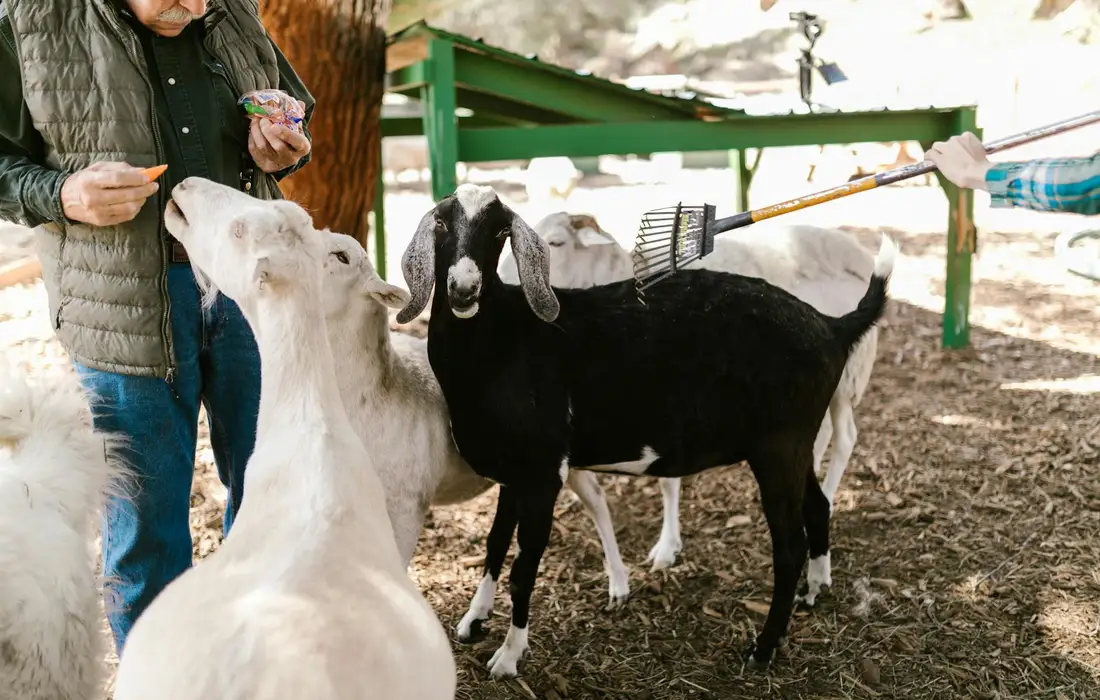
Alright, let’s get down to the practical how-to, because even the best treat can cause trouble if you don’t serve it right. Handing out watermelon without a plan is a surefire way to start a shoving match in the goat yard and upset some delicate stomachs. For backyard flocks, it’s helpful to know how chickens eat watermelon rind and seeds, and there are simple feeding guides for chickens and ducks. Keeping that in mind helps ensure the fruit stays a healthy treat rather than a stomach-churning surprise.
How Much is Just Right?
Watermelon is a snack, not a meal replacement. I stick to a firm rule: a handful of chunks per adult goat, roughly equal to one good-sized wedge split among three animals, is plenty. For my Nigerian Dwarfs, that’s about a cup total. Offer this treat only once or twice a week at most. Any more, and you’re asking for loose stools from all that sugar and moisture.
The Best Time to Offer This Treat
Timing your treat delivery makes all the difference for their digestion and manners. I always wait until after my herd has consumed their main ration of quality hay or spent hours on pasture. Their rumens need that fibrous forage working first. I reckon a late-afternoon snack, when the day’s browsing is done, works perfectly as a refreshing finish.
Preventing the Boss Goats from Hogging It All
If you just toss a melon in, your herd queen will claim it as her royal throne. To promote peace, I use the “scatter and separate” method, flinging chunks far and wide across their dry lot so the shy eaters can grab a bite. Another tactic I use is holding my dominant doe with a flake of her favorite alfalfa while the others get first dibs. Setting up multiple stations-like three old feed bowls placed in different corners-keeps the crowd moving and minimizes squabbles.
Watching your goats relish a summer treat is a pure delight. A mindful approach to portion and presentation keeps every animal healthy and the herd mood cheerful.
Beyond the Goat Pen: Watermelon for Other Farm Animals
Now, y’all might be wonderin’ if what’s good for the goat is good for the gander, so to speak. Sharin’ this juicy treat across your barnyard turns one melon into a efficient, joyful way to feed several mouths and reduce waste.
Chickens: They’ll Peck a Melon Clean
My hens act like I’ve scattered cracked corn when I bring out watermelon scraps. They adore the sweet red flesh, but those black seeds are the real prize, keepin’ ’em busy scratchin’ and huntin’ for hours. I never worry about the seeds; they pass through just fine.
Pigs: Nature’s Best Recyclers
Got a melon that got too ripe or nibbled by critters? Your pigs will thank you. Tossin’ a whole, spoiled watermelon into the pig pen lets ’em enjoy every part-rind, flesh, and seeds-in one coolin’, crunchy meal. It’s my favorite way to use what we can’t.
Sheep: Offer Tiny Bites, Sparingly
Sheep handle treats much like goats, but their systems are a touch more delicate. I only give my flock a few small, seedless chunks at a time, makin’ sure it’s a rare summer delight to avoid any digestive upset. They’ll nibble politely and leave the rest.
Making the Rind Work for You
That leftover rind is homestead gold if you see it right. I practice true zero-waste by choppin’ tough rinds for the pigs or layering ’em in the compost to nourish next year’s soil. Not a single scrap needs to leave your farm.
When to Withhold the Melon: Safety First Stewardship

-
Mind your herd’s history. I had a Nubian doe, Buttercup, who couldn’t handle rich treats after a bout with bloat years back. For any goat with a known sensitive stomach or past digestive issues, like scours or acidosis, it’s wisest to avoid watermelon altogether. The sudden sugar and moisture can restart trouble you worked hard to fix.
-
Keep treats away from baby goats still on the bottle. Unweaned kids rely entirely on their dam’s milk or a proper milk replacer to develop a functioning rumen. Introducing any treat, even a juicy melon piece, can disrupt this critical process and lead to nutritional deficits.
-
Your garbage is not their buffet. I reckon a spoiled melon from the garden is a temptation, but you must resist. Rotten, moldy, or fermented produce can contain mycotoxins or bacteria that cause severe colic or neurological damage in goats. When in doubt, send it to the compost pile, not the pasture—especially if it’s moldy hay or grain.
-
Let’s get this straight: a treat is never a meal. Watermelon rind and flesh should never replace even a single mouthful of their core diet-long-stem grass hay, diverse pasture, and a loose mineral formulated for goats. That foundation provides the fiber, protein, and nutrients they truly need to thrive. Curious about which fruits are safe for goats? Our quick guide covers safe fruits and vegetables for goats.
-
Always partner with your veterinarian on special cases. For goats managing conditions like pregnancy ketosis or urinary calculi, even a small treat can upset a delicate metabolic balance. A quick call to your vet is the best kind of stewardship, ensuring your kindness doesn’t accidentally cause harm.
Closing Questions
Is watermelon a healthy treat for goats?
Yes, watermelon is a safe and refreshing snack that provides hydration and vitamins like A and C. Always offer it in moderation to avoid digestive issues from excess sugar.
How should I prepare watermelon rind for goats?
Chop the rind into small, bite-sized pieces to prevent choking, and wash it thoroughly to remove dirt or pesticides. This turns it into a fibrous, safe supplement for their diet.
Do I need to remove seeds before feeding watermelon to goats?
No, watermelon seeds are non-toxic and easily digested by goats, so there’s no need for tedious removal. They pass harmlessly through the digestive system without causing blockages, unlike some seeds that can be troublesome for ducks.
What is the proper portion size when feeding watermelon to goats?
Limit treats to a handful of chunks per adult goat, equivalent to about one cup for smaller breeds. Offer it only once or twice a week to maintain balanced nutrition. When selecting treats, consider ones that goats enjoy and are safe for them to eat.
When is the ideal time to give watermelon to my herd?
Feed watermelon after goats have consumed their main forage, such as hay or pasture, to support rumen health. Late afternoon is often best, as a cool finish to their browsing. This is particularly important for goat digestive health and rumen function.
Can watermelon be shared with other barnyard animals?
Yes, chickens enjoy pecking at flesh and seeds, while pigs can eat the entire fruit, including rind. For chickens, cantaloupe flesh is a common treat, and there are questions about whether the rind is safe for them as part of cantaloupe safety for poultry. Ensure it’s fresh and not spoiled to keep all your animals safe and healthy.
Shutting the Gate
At the end of the day, sharing a watermelon with your herd is one of farming’s simple joys. Moderation is your most reliable tool, turning a risky treat into a safe summer delight. I always reckon if you wouldn’t let a child eat a whole one by themselves, don’t let a goat try it either. If you also keep cows, our watermelon feeding guide covers rinds, melons, and safe feeding. It points you to a complete guide you can reference next.
Now, I’m headed back out to check fences before evening falls. I hope y’all and your critters enjoy these long, sweet days. There’s nothing finer than the contented crunch of a happy animal enjoying a cool slice of melon you grew yourself. Take care of your land, and it’ll take care of you.
Further Reading & Sources
- Giving Your Goat Treats– Can Goats Eat Watermelon?
- Goats and Watermelon Rinds
- Can Goats Eat Watermelon? | Animal Hype
Caroline Mae Turner is a lifelong farm girl raised on red clay, early mornings, and the sounds of a bustling barnyard. With hands-on experience caring for everything from stubborn goats to gentle dairy cows and mischievous pigs, Caroline shares practical, tried-and-true advice straight from the farm. Her goal is to help folks keep their animals healthy, well-fed, and living their best barnyard life. Whether you're wrangling chickens or bottle-feeding a baby goat, Caroline brings a warm Southern touch and plenty of real-world know-how to every bucket in the barn.
Treat Suggestions