
Let Goats Mow Down Your Worst Weeds: A Homesteader’s Guide to Natural Brush Control
Published on: June 20, 2026 | Last Updated: June 20, 2026
Written By: Caroline Mae Turner
Howdy y’all, wrestlin’ with a thicket of thistles or a patch of poison ivy that just won’t quit? The simplest farmer’s fix is to turn a herd of hungry goats loose on it, lettin’ their natural appetites do the hard work of clearing land that makes us humans itch and sweat. I’ve used my own herd to reclaim pastures and woodlots for years, and there’s nothin’ quite as satisfying as watchin’ those bothersome plants disappear bite by bite.
What you’ll need:
- A small herd of goats (2-4 is a great start)
- Sturdy, goat-proof temporary fencing
- Fresh water for the crew
- A mineral supplement to balance their diet
We’ll get this whole system figured out so you can put your weed-eater away for good and get back to the rest of your chores.
Why Goats Are Nature’s Best Brush Crew
After forty years of managing this land, I reckon I’ve tried every method under the sun for clearing brush. From roaring, expensive machinery to chemical sprays that made me nervous, nothing compares to turning a herd of goats loose on the problem. Their four-legged efficiency saves your back, your wallet, and your soil’s future.
- Cost Savings: Renting a brush hog or buying herbicides digs deep into your pocket. Goats work for the price of their keep and some sturdy fencing. I’ve cleared acres that would’ve cost me over a thousand dollars in machinery rentals for little more than the hay I’d have fed them anyway.
- Labor Reduction: Once you’ve got your paddock set up, the goats do all the hard labor. You’re not wrestling with a heavy machine or spraying on a windy day. You’re just moving a fence line and watching your hired hands feast.
- Soil Health Champion: Tractor tires compact the earth, making it hard for rain to soak in and new plants to root. Goats’ hooves are gentle, and their droppings become instant, natural fertilizer. They improve the land they clear.
- Environmental Stewardship: There’s no chemical runoff to worry about, poisoning your creek or your well. By selectively browsing, goats encourage native grasses and forbs to come back stronger, promoting a balanced ecosystem right under your feet.
- Firebreak Creation: In dry seasons, a well-browsed parcel is a lifesaver. Goats create fantastic, low-fuel firebreaks by consuming the dry, woody undergrowth that can turn a small spark into a wildfire.
How Goats Tackle Tough Weeds: Thistles, Ivy, Oak, and Kudzu
Goats aren’t like other livestock. They’re browsers, not grazers, meaning they’d rather reach up for a woody stem than bend down for tender grass. This makes them perfect for the tough customers that overrun a homestead.
Thistles: Spiny No More
Most animals will avoid a thistle’s fierce spines, but a goat sees a tasty snack. Their agile lips and tough mouths can strip a thistle down to its base without a fuss. They devour the entire plant, flower head and all, which prevents it from going to seed and spreading further. I’ve watched my Alpine does clear a quarter-acre patch of Canadian thistles in a week, where before I’d just see more each year. The key is to get them on the patch before the flowers mature and turn to fluff. That ties into goat diet and foraging behavior—what common weeds and leaves they browse. Understanding these preferences helps guide grazing rotations and weed-control strategies.
Setting Up Your Goat Weed Control Operation
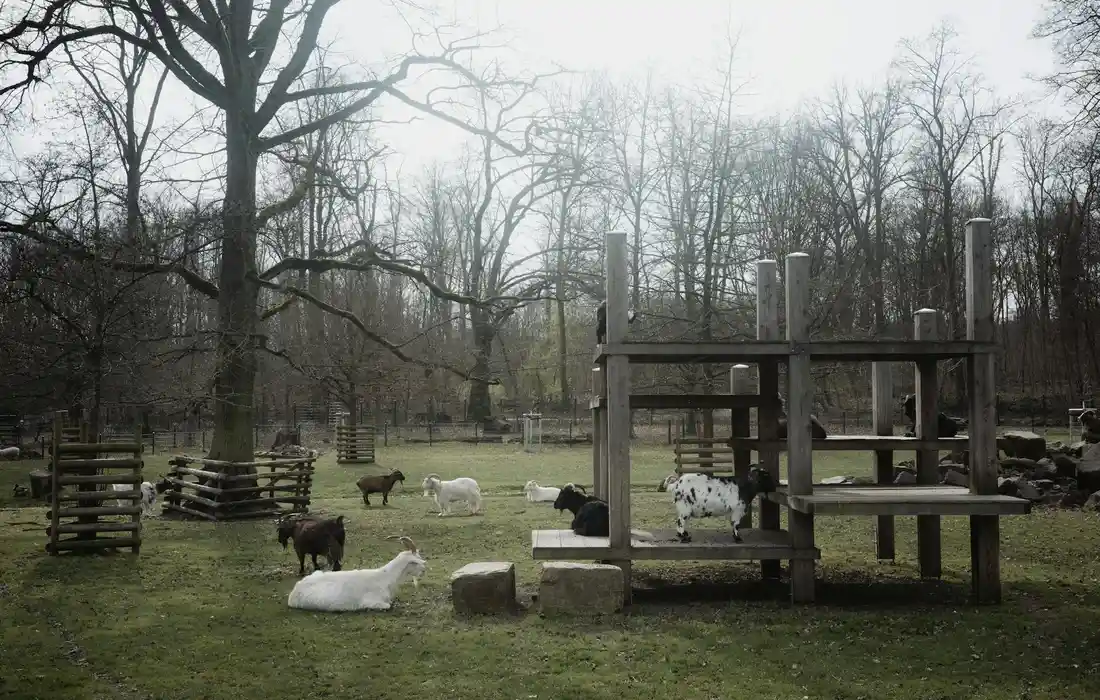
Before you turn those hungry mouths loose on your thicket, a mite of preparation saves a heap of trouble later. Proper setup isn’t just about containment; it’s about creating a safe, stress-free environment where your goats can focus on the job you hired them for: eating. I’ve learned every one of these points the hard way, usually by chasing a gleeful goat down the lane.
Fencing: Your Non-Negotiable Foundation
Standard woven wire field fence is little more than a climbing gym for a curious goat. You need a barrier that commands respect.
- Type: Use 4-foot tall, 12.5-gauge, fixed-knot field fence with 6-inch vertical stays. For kids or dwarf breeds, smaller mesh at the bottom keeps heads from getting stuck.
- The Electric Backbone: You must add electricity. Run two hot wires: one at goat nose-height (about 10-12 inches) and another at their withers (around 30 inches). This trains them to avoid leaning on the physical fence.
- Power Source: A quality solar charger works for most plots, but for wet, overgrown areas with poor sun, a plug-in charger is your best bet. You want a low-impedance charger that will push a punch through damp vegetation.
- Gates Matter: Use a metal panel or a well-built wooden gate. A flimsy gate is the first spot a goat will test, and likely win.
Water & Shelter: Simple Sustenance
Goats need clean water to process all that fibrous browse. A natural pond or stream is fine, but ensure safe access to prevent drowning. I use a simple rubber livestock trough, checked and refreshed daily, as it’s the easiest way to monitor their intake and health. For shelter, think windbreak and rain cover, not a sealed barn. A three-sided lean-to facing away from the prevailing weather is perfect. They need about 15 square feet per goat inside, just enough to get all their heads out of a driving storm.
Mastering Rotational Grazing for Weed Suppression
This is where you transition from having goats in a field to managing a targeted weed eradication crew. Rotational browsing is the secret to sustainable control; it prevents overgrazing of desirable plants while systematically stressing and depleting your target weeds.
Step 1: Calculate Your Goat Power
Don’t guess. You need enough goats to make an impact quickly. For heavy brush like blackberries or kudzu, reckon on 8-10 mature goats per acre per month. For lighter weed pressure, 4-6 may suffice. Start with a smaller, manageable number-you can always add more mouths later, but a starving herd on a cleaned-out plot is a problem.
Step 2: Design Your Paddock System
You’ll subdivide your target area into smaller paddocks using temporary electric netting or poly-wire on step-in posts.
- Map your weed-infested area and note water source access.
- Create paddocks small enough that the goats will heavily browse most weeds within 3-7 days. A good starting size is 1/10th to 1/4 of an acre for a herd of 6-8 goats.
- Ensure each paddock has its own water source or can be connected to one easily.
Step 3: The Move Schedule & Recovery Time
Watch the goats, not the calendar. Move them when they’ve eaten the leaves off your target weeds but before they start girdling bark or eating truly toxic plants they normally avoid. The goal is to force the weed to use its root reserves to push out new leaves, then hit it again before those leaves can replenish the roots. This cycle, repeated over a season or two, kills the plant. After a paddock is browsed, let it rest for a minimum of 4-6 weeks, ideally longer, to allow soil and plant recovery before cycling the goats back through. This rhythm builds soil health as you eliminate nuisance plants, similar to the principles of weed control with sheep grazing habits.
Choosing the Right Goat for the Job
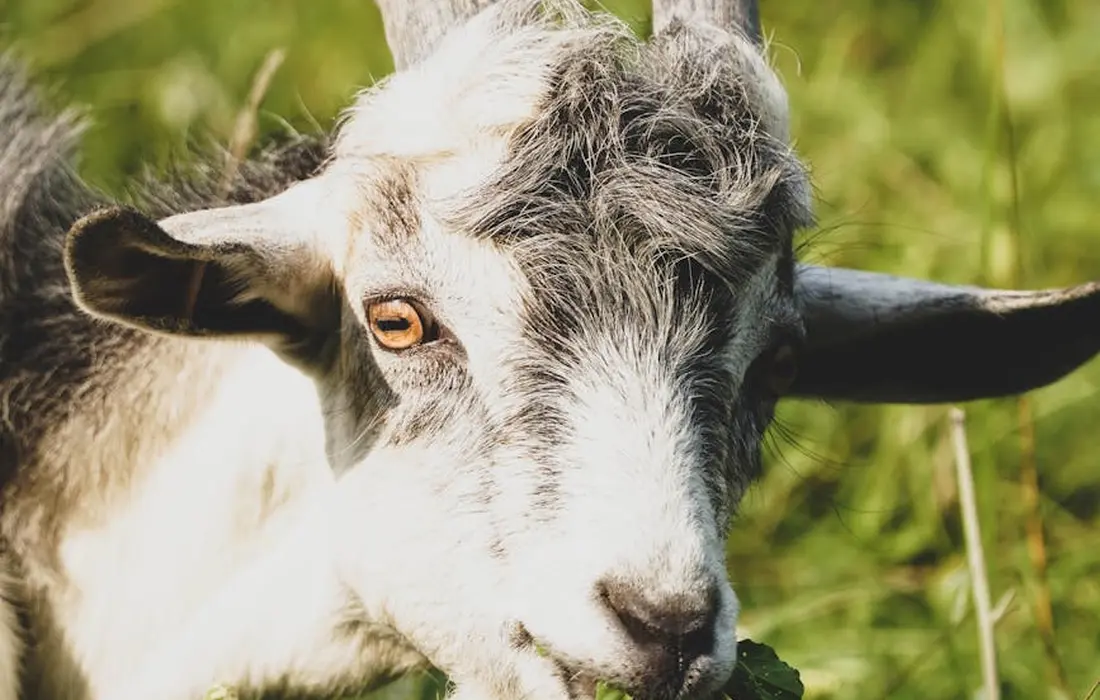
Now, not every goat is cut from the same cloth when it comes to clearing land. I learned this the hard way early on, watching a fancy dairy goat turn her nose up at a thicket of blackberries. You want a browsing machine, not a fussy eater, which means your common meat and brush-clearing breeds will nearly always outperform dairy goats on tough vegetation. Their drive is simply wired differently.
The Browsing Champions: Meat & Brush Breeds
These are your rugged, single-purpose workers built for the task. They thrive on woody stems, thorny vines, and hearty weeds that would make other livestock balk.
- Boer Goats: My personal favorites for open, brushy pasture. They’re powerful, have an incredible feed conversion rate on rough forage, and grow quickly. A herd of Boers will methodically mow down everything in their path. Their one drawback is they can be a bit more feed-motivated, so good fencing is non-negotiable.
- Kiko Goats: If hardiness is your top concern, look no further. Bred in New Zealand for rugged terrain, Kikos are exceptionally parasite-resistant and need little to no supplemental feed when on good browse. Their independence and legendary toughness make them ideal for reclaiming overgrown land where you can’t babysit them daily.
- Spanish Goats: The original American brush clearer. They are agile, prolific, and possess a pure, unadulterated will to browse. You won’t get a standardized look, but you’ll get phenomenal survival instincts and a goat that knows how to handle itself in the woods.
- Myotonic (Fainting) Goats: Don’t let the novelty fool you-these are fantastic, smaller-framed browsers. Their tendency to stiffen up makes them less likely to challenge fencing, a huge plus for the beginner. They stay close to home and are very efficient at cleaning up underbrush.
The Dairy Breed Consideration
While a Nubian or Alpine will certainly eat some weeds, their genetics are tuned for milk production on a richer diet. In my experience, dairy goats are more like precision pruners, while meat goats are the bulldozers. They’ll often pick the tender leaves and leave the tough stems you need destroyed. If you already have them, they’ll help, but I wouldn’t buy them solely for brush clearing.
Key Traits to Look For
- Foraging Drive: Watch a prospective goat. Does it immediately start sampling leaves and branches, or does it look to you for grain?
- Hardiness: Ask about parasite management and if the breed is known for thriving on browse alone. Kikos and Spanish often lead here.
- Herd Behavior: Goats are flock animals. You’ll need at least two for their well-being. A small, cohesive herd is far easier to manage and moves as a unified clearing crew.
Buying vs. Renting Your Crew
This decision comes down to your timeline and long-term goals.
Renting is brilliant for a one-time, major cleanup project. Professional goat herdsmen will bring a trained flock, often with their own solar fencing, and they’ll work a parcel down to the dirt in days. It’s efficient and you have no long-term animal care responsibility.
Buying is the path if you have recurring brush issues or want to integrate goats into your homestead’s rhythm. The initial investment in good stock and fortress-grade fencing pays for itself over years of sustainable land management. You gain manure, the potential for meat or milk, and a constant, natural solution to weed overgrowth. I reckon if you look at brush control as a perennial need, owning your own goats is the thriftiest, most rewarding choice.
Counting the Cost: What to Expect When Using Goats
Let’s set the ledger straight on using goats for weed control. While their appetites are mighty, their upkeep isn’t free, and a savvy homesteader always counts the cost before bringing new critters home. I’ve balanced this books myself, watching goats turn a thicket of poison ivy into open pasture, but I also know what comes out of my pocket.
The First Bill: Getting Goats on the Ground
You start with the goats themselves, and here you’ve got a choice. Purchasing a few head means you’re building a lasting asset, but leasing a browsing crew from a local herder is often the easiest foot in the door. I started with two weathered nannies from a neighbor, and they taught me more than any book ever could.
- Purchase Price: A healthy, registered weed-eating breed like a Spanish or Kiko goat can run you $150 to $300 a head. Common mixed-brush goats are often less, around $75 to $150.
- Lease Rate: Many herders charge by the acre or by the week. I’ve seen rates from $250 to $500 per acre per week, which usually includes the herder’s labor, moveable fencing, and guardian dogs.
- Transport: Don’t forget fetching them! If you don’t have a trailer, factor in fuel or a rental fee.
Keeping Them Fed and Fit: Ongoing Expenses
Goats are browsers, but a patch of pure kudzu or thistles isn’t a complete diet. You must budget for supplemental feed, especially in winter or when the target weeds are sparse. I keep a simple mix on hand for my herd.
- Mineral Supplements: A quality loose mineral formulated for goats is non-negotiable. A bag costs about $25 and lasts my small herd a couple of months.
- Hay & Grain: When browse is poor, expect to provide grass hay (about $8-$12 a bale) and a little grain. For maintenance, each goat eats roughly 2-4% of its body weight daily in forage.
- Water System: A reliable trough and a way to fill it are needed. I use a simple 100-gallon tank and haul water from my well.
Fencing: Your Biggest Infrastructure Cost
Good fences make good goats, as the saying goes. If your pasture isn’t already goat-tight, fencing will be your most significant upfront investment after the animals themselves. I learned this the hard way when a clever doe found the one weak spot in my old field fence.
For perimeter fencing, you have a few good options:
- Woven Wire with Electric: A 47-inch tall, 12.5-gauge field fence costs about $200 for a 330-foot roll. Adding a solar charger ($150) and step-in posts makes it effective.
- High-Tensile Electric: More affordable for large areas. You can set up a multi-wire fence for roughly $1,000 to $1,500 per mile.
- Temporary Netting: For leased goats or rotational grazing, electric netting runs about $150 for a 164-foot roll. It’s portable but requires careful management.
Healthcare: Planning for the Inevitable
Goats are generally hardy, but they’re not maintenance-free. Setting aside a fund for routine care and the occasional emergency is just part of responsible stewardship. My medicine cabinet always has a few basics, especially after learning more about the ongoing expenses for goat healthcare.
- Annual Hoof Trimming: You can do this yourself with a $15 pair of shears, but it takes time and practice.
- Parasite Control: Fecal tests and dewormer cost about $20-$30 per goat annually. Overuse of dewormer is wasteful and creates resistance.
- Vet Visits: A basic check-up might be $50, but emergency care for bloat or injury can easily run into the hundreds. Vaccinations for CD&T are cheap insurance at a few dollars per dose.
Goats vs. The Alternatives: A Side-by-Side Look
Let’s stack those goat costs against traditional methods. Herbicides and mowing offer a quick fix, but goats provide a lasting solution that builds soil health. They also help in natural weed control, especially when dealing with forage weeds that are nutrient-rich for goats. Here’s a simple comparison for a rough, overgrown 2-acre plot.
| Method | Estimated First-Year Cost for 2 Acres | What You Get |
|---|---|---|
| Goat Purchase (4 goats) | $600 – $1,200 | Live assets, fertilizer, ongoing control, soil improvement, no chemical residue. |
| Goat Lease (2 weeks) | $500 – $1,000 | Professional management, intense cleanup, no long-term animal care commitment. |
| Commercial Herbicide | $200 – $400 (for chemical and application) | Weed kill, potential soil and water impact, may require repeat applications. |
| Brush Hog Mowing | $300 – $600 (rental or hired labor) | Cut vegetation, does not remove roots, fuel costs, wear on equipment. |
The Long-Term Payoff in Your Pasture
View your goats as a living, breathing soil amendment program. Their real value isn’t just in the weeds they eat today, but in the fertile, manageable pasture they leave behind for years to come. I’ve watched my goat-cleared fields grow thicker, more nutritious grass for my cows and sheep.
They naturally cycle nutrients, trample organic matter into the soil, and eliminate seed heads before they spread. This gradual improvement boosts forage quality and quantity, directly cutting your future feed bills for other livestock. It’s an investment in the land itself, not just a one-time service.
Potential Pitfalls and How to Manage Them
Now, I don’t want to paint too rosy a picture. While goats are mighty helpful, turning them loose without a plan is a surefire way to learn some hard lessons. I’ve learned most of mine the hard way, so y’all don’t have to.
Overgrazing Desirable Plants
Goats aren’t picky in the way sheep or cows are; they’re opportunistic. Given the chance, they’ll mow down that blackberry patch you wanted for jam before touching the thistle right beside it. The key to managing their menu is through strict rotational grazing, using temporary electric netting to corral their appetites exactly where you want them. I move my herd every one to three days, never letting them graze plants lower than six inches.
The Great Escape
A bored goat is an escape artist. If the weeds are sparse or the fencing is weak, they’ll go exploring. Invest in a good, hot charger and polywire or netting for their browsing areas, and always provide a safe, familiar shelter and clean water at their “home base” to draw them back. For special needs goats, creating a safe, enriching environment helps reduce stress and prevent escapes. Predictable routines and accessible enrichment support welfare and keep them secure. A happy goat with a full belly is far less likely to test the fence line.
Parasite Load from Weedy Areas
This is a big one. Those damp, weedy corners perfect for poison ivy are also perfect for internal parasites like barber pole worm. I never let my goats browse the same wet, weedy lot repeatedly without a long rest period of 60 days or more to break the parasite cycle. I also keep a close eye on each animal’s eyelids for color-a pale pink indicates anemia from parasites-and I use a fecal egg count kit to check loads before I even think about deworming.
Managing the Manure
Goat berries are a blessing, but they need handling. Collecting the dry, pellet-like manure from their overnight shelter is one of the easiest garden fertilizers you’ll ever manage; just let it age in a pile for a few months before side-dressing your tomatoes. In the browsing area, their droppings break down quickly and feed the soil, helping desirable grasses return once the weeds are knocked back.
Integrating Goats with Your Other Livestock
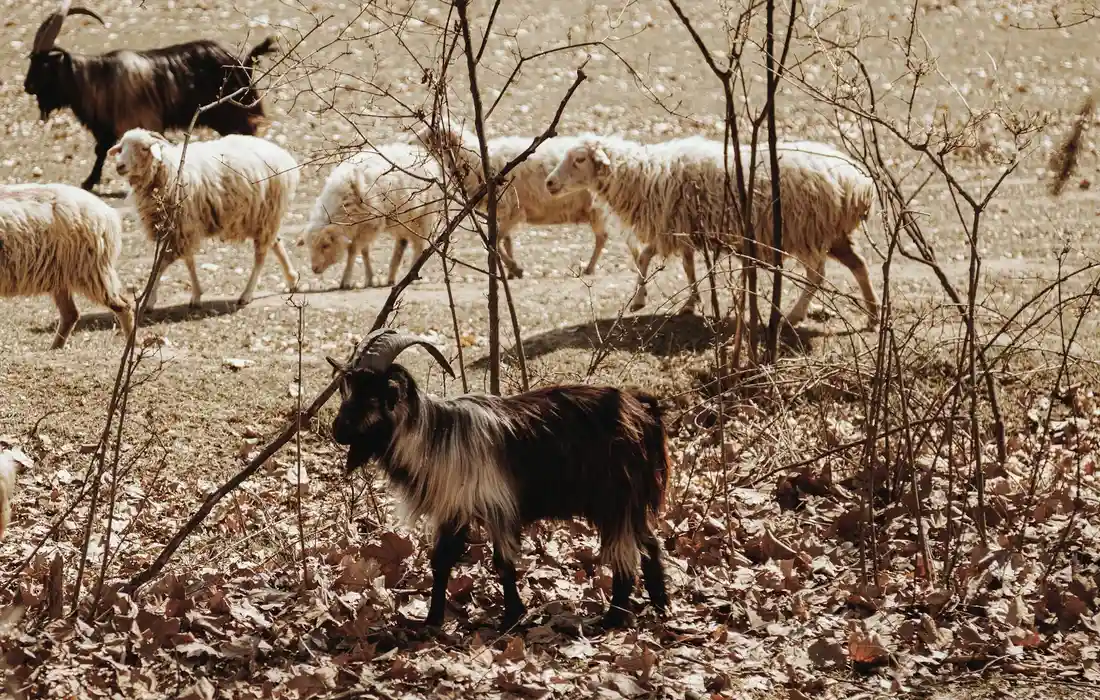
Goats shouldn’t be an island on your homestead. When you weave them into your whole farm system, their value multiplies tenfold. It’s about creating a choreographed dance of different appetites.
My chickens follow behind the goats in the rotation, about three to four days later, performing a vital cleanup duty. They scratch apart the goat manure piles, which disrupts parasite larvae, and feast on the exposed bugs and larvae. This natural sanitation boosts the chickens’ protein intake and helps keep the pasture healthier for everyone.
For your cattle or sheep, goats act as pioneering landscapers. By browsing down the thorny and woody plants cattle avoid, goats open up the pasture, letting sunlight reach the grasses your cows prefer. This multi-species grazing means you can run more animals on the same land without overburdening any single plant species. I run my goats through a weedy paddock first, then let the cows enjoy the cleared grass, and finally send the chickens in. Each species has a job, and the land gets a complete rest between cycles. It’s the thriftiest form of natural land management I know.
Closing Questions on Hiring Your Goat Crew
How much does goat weed control cost?
The cost varies greatly based on whether you buy or lease. Buying goats involves an initial investment of $75-$300+ per animal and several hundred dollars for proper fencing. Leasing a professional crew typically costs between $250 to $500 per acre per week, often including the herder’s labor and equipment. On small farms, the choice between goats and sheep can significantly impact overall cost effectiveness and daily care. Differences in fencing, feeding, and health needs mean the break-even point may shift depending on which livestock you choose.
Are there set prices for renting goats for weed control?
There is no universal price list, as rates depend on weed density, terrain, and location. Most herders price by the acre, the size of the herd needed, and the project duration. Always request a site visit for an accurate quote tailored to your specific brush problem.
How do I find “goat weed control near me”?
Search online for “goat grazing services” or “rental goats” plus your state or region. Check with local agricultural extension offices, feed stores, or homesteading groups on social media, as they often have lists of regional providers who manage browsing herds for hire.
Is goat weed control available on Vancouver Island?
Yes, several operations offer targeted goat grazing for brush management on Vancouver Island. Their services are particularly sought after for clearing invasive species like Scotch broom and Himalayan blackberry in the island’s unique climate and terrain.
What about services in Brisbane or NSW, Australia?
Professional goat weed control is a growing industry in Australia for managing firebreaks and invasive plants. In Brisbane and throughout NSW, you can find companies offering herd leasing to tackle lantana, blackberry, and other problematic vegetation common to the region.
What should I look for in goat weed control reviews?
Look for reviews that mention the herder’s professionalism, fencing reliability, and communication. Positive reviews often highlight how thoroughly an area was cleared and the goats’ impact on target weeds like blackberries or ivy over a season.
Shutting the Gate
Before you turn that herd out onto a fresh patch of trouble, always do one last thing: run your hands down their sides and look ‘em in the eye. A goat with a taut belly and a bright, curious gaze is a working goat in good order. Their remarkable weed-eating is a gift of health, not a substitute for it, so anchor their diet with quality hay and minerals to balance the wild buffet. I learned this the hard way one dry summer when the kudzu was thick but nutritionally hollow, and my herd’s condition taught me a swift lesson.
Well, friend, that’s about the size of it. There’s a deep satisfaction in brewing a cup of coffee and watching your livestock earn their keep, turning a thorny problem into rich fertilizer and good humor. I hope you find as much joy in the partnership as I have. Now, if you’ll excuse me, I see my Nubians have their heads together planning their next escapade, and I reckon I’d better go reinforce a fence. Happy grazing, y’all.
Further Reading & Sources
- 5 Ways Goats Clear Weeds Naturally
- Guide for Using Goats to Manage Weeds in Urban Public Spaces By Jennifer Cook
- FAQ about weed and brush control with goats
Caroline Mae Turner is a lifelong farm girl raised on red clay, early mornings, and the sounds of a bustling barnyard. With hands-on experience caring for everything from stubborn goats to gentle dairy cows and mischievous pigs, Caroline shares practical, tried-and-true advice straight from the farm. Her goal is to help folks keep their animals healthy, well-fed, and living their best barnyard life. Whether you're wrangling chickens or bottle-feeding a baby goat, Caroline brings a warm Southern touch and plenty of real-world know-how to every bucket in the barn.
Pasture Management