
How Much Do Cows Eat? Your Daily Pasture & Feed Calculator
Published on: June 1, 2026 | Last Updated: June 1, 2026
Written By: Caroline Mae Turner
Howdy y’all. Staring at a dwindling hay stack or a pasture that’s looking a little thin can tie a homesteader’s stomach in knots. Your main answer is this: a mature cow will generally eat between 2% and 3% of her body weight in dry feed every single day. For a 1,200-pound mama, that’s 24 to 36 pounds of hay or its equivalent in fresh forage.
What you’ll need:
- A solid estimate of your cow’s weight
- A trusted scale for your feed or a keen eye for pasture condition
- Knowledge of your hay’s quality (is it lush alfalfa or stemmy late-cut grass?)
Don’t you worry-we’ll walk through the numbers, the seasons, and the common pitfalls so you can feed your herd with confidence and get back to the million other tasks waiting on you.
The Foundation: Daily Dry Matter Intake for Cows
If you’ve ever watched a cow in a lush pasture, you might reckon she’s just eating a whole lot of wet grass. But to truly understand her needs, we have to talk about what’s left after you take all the water out. That’s dry matter. Dry matter (DM) is the cornerstone of every sensible feeding plan because it lets you compare a bucket of grain to a flake of hay on an equal, moisture-free footing. Think of it like this: a fresh tomato is mostly water, but tomato powder is the concentrated stuff. We measure feed by the “powder” weight, not the total soggy weight.
The golden rule that’s served us well for generations is simple: a healthy, mature cow will generally eat between 2% and 3% of her body weight in dry matter each day. A milking dairy cow or a heavily pregnant one will be at the top end of that range, while a dry beef cow maintaining weight might be at the lower end. These guidelines are the basics of cow diet for optimal health. Staying within these ranges supports cows’ overall health.
Let’s make this real for a standard 1,200-pound mama cow. Here’s what that math looks like on the ground:
- At 2% of her weight: 1,200 lbs x 0.02 = 24 pounds of dry matter daily.
- At 3% of her weight: 1,200 lbs x 0.03 = 36 pounds of dry matter daily.
So, she needs anywhere from 24 to 36 pounds of the “solid stuff” every single day, whether it comes from grass, hay, or a mix. That’s the target we’re always aiming for in the barn.
Forage Intake: Grass and Hay Consumption
Now, pasture grass is about 70-85% water. That means a cow has to eat a mighty volume of it to get her dry matter quota. On good pasture, that same 1,200-pound cow might consume 90 to 120 pounds of fresh, dewy grass over a day of grazing. It’s a full-time job for her! You might wonder: is grass really the cow’s primary diet, or do they need other feeds? In many systems, grass is the main forage, though diets can include legumes, silage, and grain supplements when necessary.
When the pasture’s gone or covered in snow, we switch to hay. A good-quality grass hay typically is about 85-90% dry matter. To meet our cow’s 28-pound DM need (let’s split the difference), she’d need about 31 to 33 pounds of hay. For reference, a standard square bale can weigh 40-60 pounds, so you’re looking at roughly two-thirds to a whole bale per cow, per day. I always weigh a few bales from a new lot-it’s the only way to feed accurately and avoid waste.
| Feed Type | Approx. Moisture | Dry Matter (DM) % | To Get 28 lbs DM |
|---|---|---|---|
| Fresh Pasture | High | 15-30% | ~100 lbs fresh grass |
| Grass Hay | Low | 85-90% | ~31 lbs hay |
Concentrates and Grains: When and How Much
Grains like cracked corn, barley, or oats are concentrated energy. They’re not a staple; they’re a supplement. We use them to boost calories for growing calves, hard-working dairy cows, or to add condition before winter. The key is to remember the rumen is designed for slow fermentation of forage, not a sudden sugar rush from starch.
As a firm rule, grain should rarely exceed 0.5% of body weight for a beef cow on maintenance. For our 1,200-pound lady, that’s just 6 pounds per day. Even for higher-production animals, it’s often kept below 1% of body weight. I learned this lesson years ago with a favorite heifer I over-fed with corn; her rumen pH dropped, she went off her feed, and we had a real scare. Always introduce grain slowly, over a week or two, and never feed it without plenty of long-stem forage first. That fibrous hay is like a buffer, keeping everything in her gut moving and balanced. Some readers wonder how this scales over a cow’s life—how much grain a cow eats daily across a lifetime. A concise explanation of daily versus lifetime grain consumption is provided in the next section.
What Cows Eat: Beyond the Green Pasture
A cow’s menu is more varied than you might think. It’s built on a foundation of fibrous forage that keeps her rumen-that marvelous fermentation vat-churning happily. The rumen microbes are the real workforce, and they thrive on a steady diet of cellulose from grasses and legumes. Here’s the full spread:
- Grasses: Timothy, orchardgrass, fescue, and bermudagrass form the bulk. They provide fiber and energy.
- Legumes: Clover and alfalfa are the protein powerhouses, also rich in calcium.
- Hay: Dried grass or legumes, our winter lifeline.
- Silage/Haylage: Fermented, chopped forage (like corn or grass) that’s moist and packed with nutrients.
- Mineral Supplement: A free-choice salt block fortified with calcium, phosphorus, and trace minerals is non-negotiable for health and growth.
| Common Feed | Primary Role | Notes from the Feed Bin |
|---|---|---|
| Mixed Grass Hay | Maintenance Energy & Fiber | The daily bread and butter. Keeps the rumen full and functioning. |
| Alfalfa Hay | Protein & Calcium Boost | Great for milkers or young stock. Too rich for some; can cause bloat if not introduced carefully. |
| Corn Silage | High Energy Forage | Fermented and palatable. Excellent for putting on weight or supporting lactation. |
| 12% Protein Grain Mix | Concentrated Energy & Protein | A supplement, not a meal. Used to bridge gaps in forage quality or meet higher demands. |
Pasture Grazing: The Natural Buffer
A well-managed pasture is the most cost-effective feed source you have. Lush, vegetative grass not only fills their bellies but also cuts your feed bill down to the price of fence wire and a little sweat equity. If you compare to feeding cows grain or supplements, it’s a much more economical option. The goal is to keep grass in its tasty, growing stage, not let it get stemmy and stale.
We practice rotational grazing, moving the herd every few days to a fresh “paddock.” This gives grazed areas time to recover and keeps the girls from picky-eating the best stuff and leaving the rest. To estimate what you have, know that a good pasture can produce 2 to 4 tons of dry matter per acre per year. Walking your fields and seeing how much grass is in front of the cow’s hooves versus behind them is the oldest and best gauge of whether they’re getting enough. It’s a critical part of pasture rotation management.
Stored Forages: Hay and Silage Basics
When the green curtain falls for winter or drought, stored forage is what sees you through. Hay is dried, baled, and stored under cover. Silage (like haylage or corn silage) is chopped, packed airtight in a bunker or bag, and allowed to ferment-it’s like sauerkraut for cows. Silage retains more of the plant’s original nutrients compared to sun-dried hay, but it requires strict management to avoid dangerous molds or spoilage.
Feeding these is straightforward: provide enough each day to meet that dry matter intake we talked about. Always feed in a rack or manger to minimize waste-I’ve seen cows trample more hay than they eat if it’s just tossed on the ground. For the thrifty homesteader, buying hay in the season it’s most plentiful (right after first cutting) often gets you the best price, but you must have dry, rodent-proof storage ready to go. A little extra tarp and pallet work saves a fortune in ruined bales later.
Dairy vs. Beef: Feeding for Production or Gain

Feeding a cow isn’t a one-size-fits-all affair, no more than you’d feed a marathon runner and a weightlifter the same breakfast. The entire goal dictates the grocery list. A lactating dairy cow is a supreme athlete of production, running a daily metabolic marathon to turn feed into milk, while a beef cow is often managed for efficient maintenance and steady growth.
- A mature, 1,400-pound beef brood cow in good pasture might comfortably consume 2.5% of her body weight daily, focusing on roughage to maintain her condition and support a growing calf.
- That same-sized Holstein at peak lactation? She’s an eating machine, often needing to consume over 4% of her body weight in dry matter-a staggering amount of energy-dense feed to keep the milk flowing.
Fueling Milk Production: The Lactating Cow’s Diet
I’ve stood in the parlor at 4 a.m. and watched the steam rise off a fresh pile of feed as the girls come in. That sight tells you everything about their energy needs. Making milk is hard work, and their diet must be rich enough to fuel it without burning their own body reserves. You’re not just feeding the cow; you’re feeding the dozens of pounds of milk she’s creating every single day.
- Protein and energy demands skyrocket. A high-producing cow may need a ration with 16-18% crude protein, compared to 8-10% for a dry cow.
- Typical feed ratios shift heavily toward concentrates (grains like corn, barley, or a commercial dairy pellet). A common mix might be 50-60% high-quality forage (alfalfa hay, corn silage) and 40-50% concentrate during peak lactation.
- Intake changes dramatically. A “dry” cow (not milking) is fed a maintenance diet of primarily forage to keep her healthy without putting on excessive fat. The moment she freshens and starts milking, her ration is carefully “steamed up” with increased grains to meet the new demand without upsetting her rumen.
Beef Cow Nutrition: From Maintenance to Finish
With a beef herd, your feeding strategy walks alongside the animal’s life cycle. It’s a slow, purposeful dance from pasture to plate, and each phase has its own rhythm. Wasting expensive grain on a cow that’s just grazing for two is a sure way to thin your wallet, while starving a growing calf of nutrients is a disservice to the animal and your bottom line—especially if you haven’t cut costs with smart feeding strategies.
- Maintenance for the Brood Cow: For most of the year, a mature beef mama lives on pasture, hay, or stockpiled forage. The goal is a consistent body condition score-not too fat, not too thin-so she can breed back easily and wean a hearty calf.
- Growth for Calves & Stockers: After weaning, calves on pasture may get a pound or two of supplemental creep feed per day to boost protein and keep them growing. Yearlings (“stocker” cattle) are often grown slowly on forage to build frame before the final push.
- Finishing for Market: This is where grain intake increases significantly. Over 120-200 days, cattle are transitioned to a high-energy “finishing” ration that can be 70-90% concentrate (like cracked corn or a blended feed) to promote marbling and final weight gain. Feed efficiency-how many pounds of feed it takes to make a pound of gain-becomes your key watchword here.
Factors Influencing How Much Your Cow Eats
Figurin’ out your cow’s dinner plate size depends on more than just a hunch. On my farm, I’ve learned that a one-size-fits-all feedin’ plan often leads to wasted hay or a skinny cow, so we must mind the details.
- Age: A sproutin’ calf or a lactatin’ mama cow has a engine that runs hotter. My old dairy cow, Dolly, could put away 35 pounds of hay daily when she was milkin’ heavy, while a retired steer might only need 25.
- Body Weight: This is your startin’ point for any calculation. A 1,400-pound Angus needs a mighty different pile of grass than a 900-pound Highland. We usually aim for dry matter intake between 2% and 3.5% of their live weight.
- Breed: Larger frame breeds like Simmentals will naturally consume more volume than compact breeds. Dairy breeds such as Holsteins often require a higher energy diet than hardy beef breeds like Herefords when they’re workin’.
- Health: A cow with a belly full of worms or a simmerin’ infection won’t have a mind for eatin’. A healthy rumen is a hungry rumen, and preventative care is the thriftiest feed supplement you can buy.
- Feed Quality: That dusty, mature alfalfa hay won’t tempt them like tender, green brome grass. High-quality forage is digested more efficiently, meaning your cow might need fewer pounds of it to meet her nutritional needs compared to poorer stuff.
Seasonality and Weather Impact
The weather vane and the calendar are two of your most important feed guides. Cows don’t just eat for growth or milk—they eat for temperature regulation, and that changes everything with the seasons.
- Cold Weather: When the wind starts howlin’, your cows are burnin’ calories just to stay warm. I’ve seen intake jump by a quarter or more in a hard Tennessee winter. Always offer extra good-quality hay when the frost settles.
- Extreme Heat: Durin’ a heatwave, appetites falter. Provide ample shade, lots of fresh water, and shift feedin’ times to the cooler evening hours to encourage them to eat.
- Adjustin’ Feed Type & Amount: In deep winter, I sometimes mix in a pound or two of corn or a commercial pellet for extra energy. When spring pasture is lush and high in protein, you can often cut back on supplements to avoid waste.
- Pasture Management: Match your rotation to the grass’s growth cycle. Fast spring growth means movin’ animals quicker to prevent waste, while summer’s slow growth requires bigger paddocks or a plan to bring the hay to them.
The Role of Body Condition and Health
Your hands tell a story your eyes might miss. Regular hands-on body condition scorin’ is the most honest measure of whether your feed program is hittin’ the mark.
- Body Condition Scoring (BCS): Feel for flesh over the ribs, hooks, and pins. You should feel ribs with a slight press, not see them. A score of 5 on a 1-to-9 scale is a good place for most mature cows.
- Signs of Underfeedin’: Prominent ribs, a sharp backbone, a thin tailhead, and a rough hair coat. The herd will also be more vocal and anxious at feedin’ time.
- Signs of Overfeedin’: Smooth, spongy fat cover where you can’t feel ribs, a heavy brisket, and fat patches around the tailhead. This wastes money and risks metabolic disorders.
- Illness & Parasites: A sudden loss of interest in feed is your first clue. Internal parasites compete for nutrients and suppress appetite. A consistent dewormin’ schedule and keen daily observation are your best defenses for keepin’ feed conversion efficient.
Water: The Essential Partner to Feed
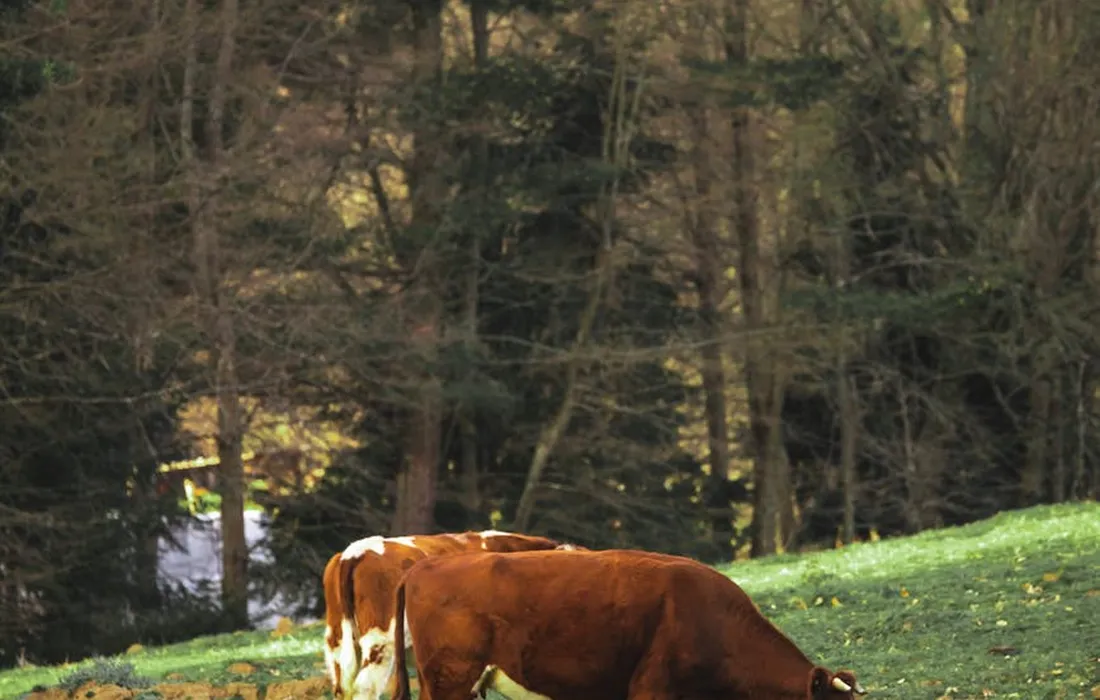
Y’all might reckon feed is the main event, but water is the quiet star of the show. Water intake directly controls how much your cows eat and how well they digest every bite, making it the cornerstone of good husbandry.
- Water drives the digestive engine. A cow’s rumen requires ample moisture to ferment forage; without it, feed efficiency plummets and health issues creep in.
- Plan for 10 to 15 gallons per mature beef cow each day. In summer’s heat, this need doubles-expect 20 to 30 gallons per head, with lactating or stressed animals requiring even more.
- I learned the hard way with a thirsty herd. One scorching August, a clogged pipe left my pasture trough dry for a day. The cows stood around it, depressed, and their grain consumption dropped by half. Clean water access is non-negotiable for thriving animals.
Ensuring Adequate Water Access
Getting water to your herd reliably takes a simple, steadfast system. Here’s how I manage it on my place.
- Trough Placement: Set waterers in shaded areas no more than 500 feet from grazing or resting spots. Cows are creatures of convenience and avoid long walks for a drink.
- Cleaning Routine: Scrub tanks and troughs weekly with a brush to remove algae and silt. I do mine every Saturday morning-it prevents off tastes that discourage drinking.
- Winter Heating Solutions: Invest in a floating tank heater or a heated automatic waterer. I’ve used both for years; they’re worth every penny to ensure steady intake when temperatures plunge.
To calculate your herd’s total need, multiply your cow count by the daily gallon estimate. For example, 5 cows on dry winter hay might need 15 gallons each, totaling 75 gallons daily. Always size your storage and delivery for peak demand, especially during summer or when feeding dry baled hay.
Practical Feeding Guidelines for the Homestead
Now, let’s roll up our sleeves and talk about the daily doing. The most sustainable and cost-effective feeding plan starts with a good, hard look at what’s already growing on your land. I’ve run my herd for decades on this principle, and it’s saved more than a few pennies while keeping the animals hale.
- Use a clear, step-by-step calculation to pinpoint exactly what one animal requires, so you’re never guessing or over-spending.
- Your pasture is your primary asset; treat it as the main course and any bagged feed as a occasional side dish.
Step-by-Step: Calculating Daily Feed for One Cow
Don’t let the numbers spook you. I keep a little notebook in my overalls pocket for this very reason, and it’s saved me from many a miscalculation. Here’s how I do it, plain and simple.
- Determine the cow’s body weight. If you lack a scale, a livestock weight tape wrapped around the heart girth gets you mighty close. A beef cow might weigh 1,200 pounds, while a dairy Jersey could be 900.
- Apply the 2-3% DM rule based on her purpose. Dry Matter (DM) is the nutrition after moisture is removed. A dry, mature cow just maintaining weight needs about 2% of her weight in DM. A lactating cow or a growing calf needs up to 3%. So, a 1,000-pound mama cow making milk needs 30 pounds of DM daily.
- Convert DM needs to actual pounds of your specific feed. This is the key! Fresh grass is only about 20-25% dry matter. So that 30-pound DM need translates to a whopping 120 to 150 pounds of fresh pasture. Good, baled grass hay is roughly 85% DM, meaning she’d need about 35 pounds of hay. Grain is similar to hay in dryness.
- Adjust for quality and waste. Stemmy, old hay or drought-stressed pasture has less nutritional punch, so your cow will need to eat more volume. I always add an extra 10% to my final figure to account for spoilage, wind, and picky eating. It’s thrifty to plan for waste.
Managing Pasture and Supplementation
Good stewardship means being a student of your field. Your cows will tell you what they need long before a feed bag ever could, if you learn to watch and listen.
- Rotate pastures when grass height gets down to 3 or 4 inches. This gives the plants time to recover and keeps parasites in check. I move my herd when I see more boot sole than green blade.
- Begin hay supplementation when the pasture can’t keep up. Usually, this is after the first hard frost or during a summer dry spell. When the girls are hanging by the gate all day, that’s your sign.
- Introduce grain slowly, over at least two weeks. A sudden switch can founder a cow. Start with no more than a pound per day, mixed with her hay. For a heavy milker, you might slowly work up to a pound of grain for every three or four pounds of milk she gives.
- Monitor body condition every month. You should be able to feel the last two ribs with light pressure, but not see them. If her backbone is sharp, she needs more groceries; if it’s buried, cut back.
- Boost feed efficiency by never letting water tanks run dry and offering a plain white salt block plus a quality mineral mix. Feeding hay in a rack instead of on the ground can cut your waste by a third overnight. It’s a simple switch with big rewards.
Estimating Feed for Your Entire Herd
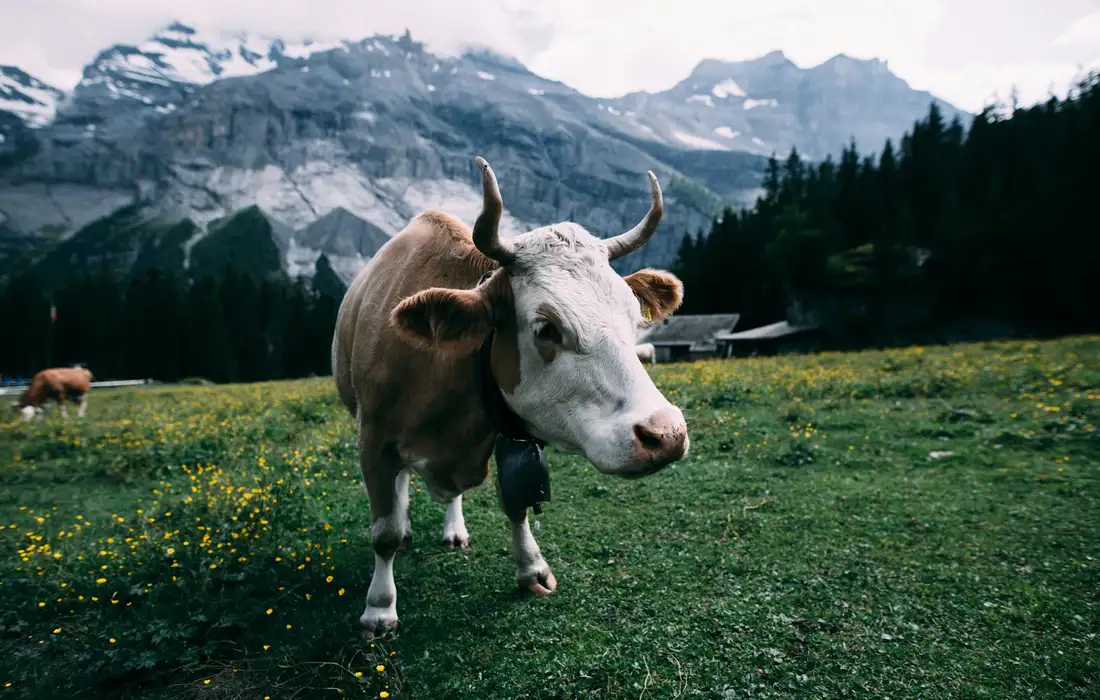
Figuring out supper for one cow is straightforward, but feeding a herd requires a different kind of arithmetic. You scale up from individual to herd by multiplying, but always pad your numbers for those hearty eaters and mama cows who need extra. On my farm, I calculate for the highest need in the group and then add a buffer so I never come up short.
Here’s how I break it down for y’all:
- Find your baseline: Use the daily intake you know for an average animal, like that 2-3% of body weight in dry matter.
- Multiply by every mouth: Take that number per critter and multiply it by your total head count.
- Factor in the exceptions: Always add 10-15% to your total for pregnant, nursing, or growing animals, because their needs run higher.
For a simple formula to estimate monthly hay or grain, reckon it this way. Monthly Feed Need (lbs) = Daily Intake per Cow (lbs) × Number of Cows × 30 Days. Keep in mind each cow’s daily feed requirements and nutritional needs to ensure the right balance of energy, protein, and minerals. This awareness helps you tailor the monthly totals to your herd’s actual daily intake. Do this separately for hay and any supplemental grain you use.
This math leads you straight to your budget. Knowing your herd’s total consumption lets you plan purchases seasonally, saving you from price shocks at the feed store. I aim to buy early and often store a bit extra, because running out in February is a situation I don’t care to repeat.
Bulk Feed Calculation and Cost Considerations
Let’s walk through a real example from my winter preparations last year. Say you have a small herd of 5 beef cows, each needing 30 pounds of hay daily through a 120-day winter. Here’s how the tally looks:
- Daily herd need: 30 lbs × 5 cows = 150 pounds of hay.
- Seasonal need: 150 lbs/day × 120 days = 18,000 pounds of hay.
- In tons: 18,000 lbs ÷ 2,000 lbs/ton = 9 tons of hay for the season.
Seeing that total in tons really drives home why buying in bulk is the only way to go for your pocketbook. It turns a guessing game into a planned investment.
Use this chart as a quick reference for common herd sizes, but remember to adjust for your animals’ condition and the quality of your forage.
| Herd Size | Daily Hay Need (lbs)* | Monthly Hay Need (tons)** | Typical Grain Supplement (lbs/day)*** |
|---|---|---|---|
| 2 cows | 60 lbs | 0.9 tons | 4-6 lbs |
| 5 cows | 150 lbs | 2.25 tons | 10-15 lbs |
| 10 cows | 300 lbs | 4.5 tons | 20-30 lbs |
*Based on 30 lbs per cow per day. **Monthly tonnage calculated for 30 days (1 ton = 2000 lbs). ***Grain at a common supplement rate of 0.5-1% of body weight; adjust for work or production.
Buying feed by the ton or full truckload slashes your cost per pound compared to bagged feed. Proper storage is where your thriftiness pays off-keep hay dry and elevated, and store grain in sealed, pest-proof containers to protect your investment. I use an old barn loft and metal bins, and it saves me from wasting a single precious bale.
Closing Tips for Your Feeding Routine
How much water does a cow drink daily?
A mature cow typically drinks 10 to 15 gallons of water per day. Intake can double to 20-30 gallons in hot weather or for high-producing dairy cows, as water is essential for digestion and regulating body temperature.
What factors affect a cow’s feed intake the most?
The main factors are the cow’s weight, production stage (like lactation), and feed quality. Weather extremes and the animal’s overall health also significantly impact how much it will consume daily.
How much feed does a dairy cow eat compared to a beef cow?
A lactating dairy cow eats significantly more, often over 4% of her body weight in dry matter to support milk production. A beef cow on maintenance typically eats 2-2.5% of her weight, focusing more on forage.
What do cows eat besides grass?
Besides fresh pasture, cows commonly eat hay, silage (fermented forage), and grains like corn or barley as a supplement. They also require free-choice mineral supplements and salt for balanced nutrition. Beyond grass, cows have a variety of feed options, including byproducts and complete mixed rations. Essential supplements like minerals and salt help ensure balanced nutrition with these feeds.
How much grain should a cow eat per day?
Grain is a supplement, not a staple. For a mature beef cow, it should rarely exceed 0.5% of her body weight (about 6 lbs for a 1,200-lb cow). Always introduce grain slowly and alongside ample forage.
How do you calculate feed intake for a herd of cows?
Calculate the daily dry matter need for one average cow, multiply by your number of head, and then add 10-15% for pregnant or nursing animals. Always base your bulk purchase and storage plans on this padded total.
Shutting the Gate
After all this talk of pounds and percentages, your most important tool is your own two eyes. The math gives you a solid starting line, but your herd’s condition tells you if you’re on the right track. Your daily chore of watching them-seeing how they move to fresh grass, noting the sheen on their coats, and even glancing at the consistency of their manure-is the ultimate gauge of whether your calculations are working in the real world.
I’m mighty grateful y’all spent this time with me. There’s a deep, quiet satisfaction that comes from filling a hay rack on a crisp morning or watching your cows contentedly graze at dusk, knowing you’ve provided well for them. May your pastures stay green, your silage smell sweet, and your homestead be filled with the peaceful sounds of healthy, well-fed cattle. Happy farming, neighbor.
Further Reading & Sources
- Clemson Feed Ration Calculator
- Feed Ration Calculator – EzRation
- Calculators | Oklahoma State University
Caroline Mae Turner is a lifelong farm girl raised on red clay, early mornings, and the sounds of a bustling barnyard. With hands-on experience caring for everything from stubborn goats to gentle dairy cows and mischievous pigs, Caroline shares practical, tried-and-true advice straight from the farm. Her goal is to help folks keep their animals healthy, well-fed, and living their best barnyard life. Whether you're wrangling chickens or bottle-feeding a baby goat, Caroline brings a warm Southern touch and plenty of real-world know-how to every bucket in the barn.
Diet Requirements