Turn Your Holiday Tree into a Healthy Goat Treat This Winter
Published on: April 22, 2026 | Last Updated: April 22, 2026
Written By: Caroline Mae Turner
Howdy y’all, and welcome back to the barn. Yes, your leftover Christmas tree can absolutely be a safe, nutritious snack for your goats, provided it’s the right kind of tree and hasn’t been treated with any chemicals. I’ve been tossing pine, fir, and spruce into my pens for decades after the holidays are over, turning a chore into a feast for the critters.
- The tree itself: Must be a natural pine, fir, or spruce.
- A handsaw: For cutting manageable branches.
- Five minutes: That’s about all the time this job takes.
Let’s walk through the simple steps so you can clear the porch and enrich your herd’s diet in one fell swoop.
The Straight Talk on Safety: What Every Goat Keeper Needs to Know First
Before you haul that tree to the barn, let’s have a frank chat over the fence. I’ve seen the eager look in a goat’s eye when they spot fresh greenery, but good stewardship means putting their well-being before their cravings. The real danger isn’t the tree itself-it’s almost always the chemical treatments, decorations, or our own well-meaning overindulgence.
Goats are remarkably hardy browsers, but their digestive systems have limits. Think of a Christmas tree as a rich holiday cookie, not a main course of hay. A look at goat digestive health and rumen function informs the best feeding practices to keep that balance. Follow these simple lists, and you’ll be setting the table for a safe, festive snack.
Your “Must-Do” Checklist
- Confirm the tree is 100% pesticide-free and has never been treated with chemical flame retardants or anti-desiccants.
- Remove every single ornament, ornament hook, strand of tinsel, speck of flocking, and piece of artificial snow.
- Know your tree species (we’ll get to that next) and introduce it slowly.
- Offer the tree in a controlled manner, limiting access to prevent gorging.
Absolute Don’ts
- Never feed a tree from a commercial lot without verifying its spray history.
- Don’t leave goats unattended with a whole, uncut tree; they may try to eat it all at once.
- Avoid trees with artificial scent or color sprays, even if they smell like “fresh pine.”
- Don’t replace their regular roughage with evergreen browse; it’s a supplement, not a staple.
Identifying Pesticide-Free and Untreated Trees
Sourcing a safe tree requires a bit of old-fashioned conversation. I call it “tree lot detective work.” Last December, I stood at a local lot and simply asked the young attendant, “Son, do you know if these trees were sprayed with anything before they were cut?” He didn’t know, but he got his boss on the phone for me right then and there. You have to be the advocate for your herd, and that starts with asking direct questions.
- Ask the seller point-blank: “Was this tree grown with any pesticide or chemical spray program?” If they hesitate or say yes, walk away.
- Seek out local “Choose-and-Cut” farms. A quick phone call to the farmer often yields the best info; organic tree farms are a true treasure.
- The safest bet is a tree from a trusted friend or family member who you know didn’t treat their own landscape tree.
- My granddaddy’s rule holds true: When in doubt, leave it out. A bale of extra hay is a safer holiday treat than a risky tree.
Essential Pre-Feed Prep: From Living Room to Barnyard
Once you’ve secured a clean tree, the work isn’t over. Preparation is what separates a thoughtful keeper from a careless one. Grab your work gloves and a hand saw.
- Strip it bare. Do this indoors or on a tarp to catch falling hooks and glitter. Check every branch junction for hidden ornament hooks or melted candle wax.
- Run your hands along the branches. Feel for any residual, sticky sap from adhesives or heavy ornaments-this can be a mess and isn’t ideal for consumption.
- Saw the trunk into 2-3 foot sections and/or separate a few large branches. This prevents boss goats from hoarding the whole thing and reduces the risk of playful butting injuries from a large object.
- For particularly sappy pines or firs, I often let the sections sit in a dry, covered area for a day. This lets some sap harden, making the branches less sticky for my girls and reducing the resin flow they ingest.
Pine, Fir, or Spruce? A Species-by-Species Breakdown for Goats
Just like people have favorite pies, goats often show preferences for different evergreens. Having tossed many types into the paddock over the years, I can give you the barnyard review. Most common Christmas tree species are safe for goats in strict moderation, but their flavors and effects can differ quite a bit, especially when compared to some like sumac or arborvitae which can be toxic.
Pine Trees: The Goat’s Favorite Browse?
If my herd had a vote, Scotch Pine and White Pine would win every time. They’re often the first chosen when I offer a mixed bunch. The long, flexible needles seem easy for them to strip, and they’ll happily gnaw the bark off the younger, softer branches. Pine is generally the most readily accepted and well-tolerated Christmas tree for goats, likely because its terpenes (those sharp pine scents) align with their natural browsing chemistry.
I use pruned pine branches year-round as stall enrichment and a natural deodorizer. A crucial regional note: out West, avoid Ponderosa Pine for pregnant does, as it’s been linked to complications. For our common Christmas pines, the main risk is overconsumption leading to a tummy ache, not toxicity.
Fir Trees: A Festive Treat with Caution
Fraser Fir, Balsam Fir, and Douglas Fir bring that iconic Christmas smell to the barn. Goats are usually interested, attracted by that fresh aroma. The needles are softer and flatter than pine, which might make them easier to chew. Those wonderful fir oils, however, can be a bit strong for a delicate rumen if your goat decides to make a full meal of them.
I treat fir more like a short-duration snack. I’ll give them a branch for an hour, then remove the leftovers. I’ve seen a few goats gorge on fir and later look a bit regretful, though no serious harm came from it. It’s best offered as a limited novelty, not a primary browse source.
Spruce Trees: The Tangy Option
Blue Spruce and Norway Spruce are the bold-flavored seltzers of the evergreen world. Their needles are sharp, stiff, and have a distinctly tangy, almost citrusy note when crushed. My goats will nibble spruce, but they rarely devour it with the same enthusiasm as pine. The higher acidity and stronger flavors mean spruce is best offered as an occasional browsing item, mimicking how a goat in a mixed forest might only taste it here and there.
If you have a spruce, let them investigate. They’ll likely strip a few needles, chew on some bark, and wander off. That’s perfectly fine. It provides mental stimulation without a large intake. This mirrors their natural foraging behavior perfectly-sampling a variety of plants without overdoing any single one.
Navigating Risks: Toxins, Digestion, and Goat Health
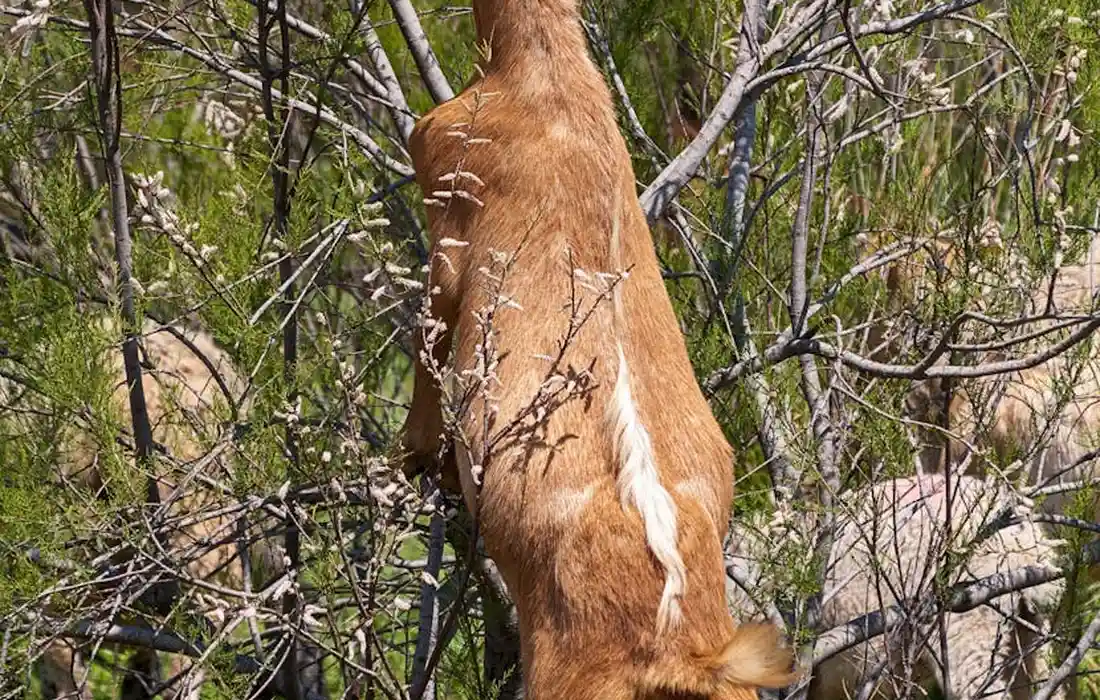
Let’s talk turkey about what could go wrong. The main concerns with evergreens are those strong-smelling oils-terpenes and camphor. Think of them as the tree’s natural defense oils against pests and browsing animals. A goat’s mighty rumen is designed to tackle tough stuff, but it can be overwhelmed.
Poisoning from Christmas trees is genuinely rare if you follow the basic rules of moderation and selection, but a mindful shepherd always watches the herd. Their complex stomach system can process small amounts of these compounds, but a sudden, large feast of fresh boughs can irritate the digestive tract.
The key is to not let the novelty of a treat disrupt their finely-tuned fermentation vat. I’ve seen a curious doe overindulge on a fresh spruce branch I hadn’t meant to leave in the pen, and let me tell you, the cleanup wasn’t pleasant. Watch for clear signs of distress: if a goat goes off its regular feed, develops loose stools or diarrhea, or acts unusually lethargic, you’ve got a problem.
Understanding Terpenes, Oils, and Goat Digestion
Picture those aromatic tree oils like a rich spice for their rumen. A tiny pinch can enhance the flavor of a stew, but a whole cup will ruin the pot. In tiny, occasional amounts, these compounds can act as a mild digestive stimulant or even have natural deworming properties, which is why goats are drawn to pine bark and needles in the wild.
The magic happens in the rumen, where billions of microbes work to break down fibrous cellulose into usable energy. These microbes are specialists, and throwing a big, oily, resinous meal at them is like asking a baker to suddenly fix a tractor-it’s outside their normal job description. It can temporarily upset their microbial balance, leading to indigestion. In cows, the rumen is one stage in a larger, multi-chamber stomach that turns plant fiber into usable nutrients. This helps explain how the ruminant digestive system processes food to meet nutritional needs.
I reckon on our farm, we use this knowledge to our advantage. A few branches after the holidays provide a diversifying browse that keeps their digestion active and curious without becoming the main course.
Spotting and Preventing GI Issues and Choking Hazards
Prevention is always cheaper than a vet bill. A few simple habits will keep your goats safe and happy while they enjoy their seasonal snack. Understanding the annual cost breakdown for raising goats—feed, shelter, and healthcare expenses—helps you budget effectively for the year. With preventive care in mind, you can keep those costs in check while your herd thrives.
- Always provide ample fresh, clean water. This is non-negotiable and aids immensely in digestion and processing any new forage.
- Offer the tree after they’ve filled up on their quality hay. This ensures it’s a supplement, not a staple.
- Break or cut the tree into manageable sections. Avoid tossing in large, whole branches with dense, spiky needles that could wad up or cause choking.
- Remove all tinsel, artificial snow, and ornament hooks with a fine-tooth comb. These are far more dangerous than the tree itself.
Despite your best efforts, know when to call for help. If you observe any of these symptoms, pick up the phone for your veterinarian:
- Bloat or a visibly distended, tight left side.
- Complete refusal of food and water for more than half a day.
- Signs of abdominal pain: kicking at the belly, frequent getting up and lying down, vocalizing.
- Severe, watery diarrhea that leads to obvious weakness or dehydration.
Your vigilance is the best safeguard, allowing your herd to safely explore the crunchy, aromatic joy of a spent Christmas tree.
The Practical Homesteader’s Feeding Guide
Now, let me tell you how we handle this seasonal snack out in the barn. I treat our post-holiday pines and firs like a special weekend dessert, not a main course. You might see folks trying to stretch their hay budget with trees, but that’s a sure path to trouble. This is purely a fun bit of enrichment that breaks up the winter boredom for the herd, and I reckon that’s worth more than any penny you might save.
On my farm, after the ornaments come off, I’ll haul one tree out to the goat pen every few days during that first week of January. Frequency is key. It’s a holiday treat, not a daily feed. I might offer a tree on a Monday, then wait until Thursday or Friday before bringing another. This keeps it novel and prevents their rumens from getting too accustomed to the oils.
For quantity, think moderation. My rule of thumb is a branch or two per goat from a single tree. If you’ve got a small herd of three or four, a whole tree is fine. For a bigger crowd, I’ll often use a hand saw to cut the tree into sections and spread them out. You want every goat to get a few good mouthfuls of needles, not an all-you-can-eat buffet.
Best practices start with securing that trunk. A rolling tree can startle animals or even pin a leg. I drive a sturdy T-post into the frozen ground and use baling twine to lash the trunk to it, good and tight. Some years, if the soil isn’t iron hard, I’ll even sink the stump into a five-gallon bucket filled with rocks for a solid anchor. It’s a five-minute task that prevents a world of hassle.
How Much and How Often: Balancing the Diet
Keeping your goats healthy means remembering what their dinner plate should look like. I follow the 90/10 rule in my feeding program: 90% of their diet is their reliable, balanced standard feed, and 10% can be for treats, browse, and kitchen scraps. Christmas tree browse falls squarely into that 10% enrichment category, and it should never nudge the foundational feeds out of the trough. Here’s a quick look at how it all fits together. If you’re wondering whether goats eat a complete diet, the nutrition basics cover what to include and how to balance nutrients. This ties directly into how the 90/10 rule and browse fit into their overall feeding plan.
| Feed Type | Primary Role | Key Nutrient | Notes |
|---|---|---|---|
| Quality Grass Hay | Main Energy & Fiber Source | Structural Carbohydrates | Should be available 24/7. This is the bedrock of their winter diet. |
| Christmas Tree Browse | Enrichment & Supplemental Fiber | Volatile Oils & Condensed Tannins | Offered sparingly for mental stimulation. Aids in natural worm resistance. |
| Grain Supplement | Concentrated Protein & Energy | Protein (14-18%) | Fed in measured amounts to pregnant, milking, or growing goats. |
See that table? It shows you the team. Hay’s your star player, grain’s your power substitute, and the Christmas tree is the cheerful mascot that boosts morale. Let that mascot run the game, and you’ll have a losing season on your hands.
Pasture and Pen Setup for Safe Grazing
Where you place that tree matters as much as how much you give. You want to set the stage for safe, leisurely browsing that doesn’t create new problems. Here’s my step-by-step method for setting up the holiday buffet.
First, anchor it securely in a pasture or dry lot pen. I avoid muddy areas where the tree could get trampled into the muck quickly. This aligns with goat foraging pasture management best practices, which emphasize secure anchor points, drainage, and avoiding mud for healthy grazing. A sunny spot on a cold day is perfect-lets the goats enjoy their snack while soaking up some warmth.
Second, position the tree well away from fences. A goat will push and shove on it, and if it’s near wire fencing, they might accidentally roll it into the fence, risking injury or damage. I leave a clear buffer zone of at least eight feet from any fence line.
Third, for a slower, more controlled feast, consider hanging individual branches from a sturdy horizontal rail or the fence top. This mimics natural browsing and keeps them busy longer. I use old binder twine for this-it’s cheap and holds up fine.
Finally, cleanup is part of the job. After two or three days, I remove any leftover, stripped-down woody parts. Those bare branches can poke eyes, and if left to get trampled into bedding, they make for a lumpy, uncomfortable rest. A clean pen is a healthy pen, so I toss the skeleton of the tree onto the brush pile once the goats have lost interest.
Beyond Goats: Quick Notes for Other Barnyard Critters
Now, just because my goats are the main event for an old Christmas tree doesn’t mean the other animals on the place can’t get in on the fun. The same two sacred rules apply for every critter, no exceptions: the tree must be absolutely free of any chemical treatments, and every last bit of tinsel, ornament, and light must be stripped away. Here’s a quick rundown for the rest of your barnyard brigade.
Chickens and Geese: Scratch and Peck
My flock goes downright silly over a dried-out tree laid in their run. They’ll peck at the brittle needles, which can offer a minor boost of vitamins like C, and they adore hiding in the branches for shade and cover. I’ve found laying the whole tree on its side provides the best entertainment, turning it into a jungle gym and a bug-hunting ground all in one. Just watch for sticky sap on their feathers-it’s a nuisance to clean. I let the tree dry out good for a week or so first, which cuts down on the mess considerably.
Pigs: Rooting Around the Stump
If you want to see pure porcine joy, toss that tree stump into the pig pen. They’ll root at it, chew the bark, and gnaw on the wood, which is a fantastic source of enrichment and roughage. That fibrous wood can help keep their digestive tracts moving smoothly, especially in winter when they’re less active. My advice? Place it in a dry, clean spot in their area. You don’t want sap mixing with mud and caking on their sensitive snouts. I recall one of my old sows, Bertha, who’d work on a pine stump for days, content as can be.
Cows and Sheep: A Bit of Browse
While a cow or sheep might take a curious nibble, they’re true grazers at heart. Their rumens are fine-tuned for grasses and hay, not woody browse. That preference ties into why cows eat grass: understanding ruminant digestive systems explains how their multi-chamber stomachs digest fibrous forage. It also highlights how grazing supports their energy and nutrient needs. You can certainly drag a tree out to the pasture as a curiosity and a minor source of extra fiber, but don’t expect them to target it like a goat will. Sheep, being closer cousins to goats, might investigate a bit more, but they’re often more cautious. Think of it as a seasonal salad garnish for them, not the main course. It’s a harmless bit of environmental enrichment, nothing more.
Closing Tips for Your Barnyard
Can I use my old Christmas tree as feed for my chickens or pigs?
Yes, but their use is different than for goats. For chickens, a dried tree is best as a source of enrichment and bug-hunting cover in their run. Pigs enjoy rooting at and chewing on the stump and wood, which provides mental stimulation and roughage.
How long can I leave a Christmas tree in with my animals?
Monitor the tree and remove it once the tasty needles and bark are stripped off. For goats, this is often 1-3 days. Remove bare, woody branches promptly to prevent eye pokes or them becoming a tangled hazard in the pen.
My tree is very dry and losing needles. Is it still safe to offer?
A completely dry, brittle tree is generally safer in terms of having lower resin and oil content. It is excellent for chickens to peck and play in. For goats, it’s less nutritious but still a safe browsing activity, provided all chemical and decoration rules are followed.
Is it safe to put a tree in a pasture with multiple species together?
Use extreme caution. Goats will likely consume the most, so you must limit their access to prevent overindulgence, especially when foraging for plants and trees that might be toxic. Ensure the tree is securely anchored so it cannot be knocked into other animals, and always supervise initial interactions.
Can the sap from pine or fir trees harm my animals?
Fresh sap is sticky and can mat feathers or fur, but it is not toxic. Letting cut branches dry for a day can reduce sap flow. The main concern is cleanliness and comfort, not poisoning.
What should I do with the leftover trunk and branches after the animals are done?
The stripped-down wood can be added to a brush pile, chipped for mulch (away from animal areas), or used as kindling. Do not leave it in the animal area to rot or become a footing hazard.
Shuttin’ the Gate
When the tinsel’s packed away and you’re eyein’ that bare tree, remember the simplest rule of all: Your goats can enjoy a safe, seasonal snack, but only if that tree is as natural as the ones in your back woodlot—free from flame retardants, artificial snow, or any chemical cocktail. That’s the line between a treat and a trouble. Start with just a branch, watch your herd, and let their contentment—not just their consumption—be your guide.
I reckon there’s a special kind of peace in watchin’ the critters rustle through those fresh boughs on a crisp winter afternoon. It turns a chore into a little celebration, a connection between your holiday and the steady rhythm of the barn. From my homestead to yours, I hope y’all find joy in these simple, sustainable loops. Here’s to happy goats, healthy pastures, and the good, honest work that ties ’em all together. Merry Christmas, and Happy Homesteadin’.
Further Reading & Sources
- Mount Airy farm collecting Christmas trees to feed goats
- These South Chicago Goats Will Eat Your Christmas Trees
- What to Know About Feeding Goats Christmas Trees
Caroline Mae Turner is a lifelong farm girl raised on red clay, early mornings, and the sounds of a bustling barnyard. With hands-on experience caring for everything from stubborn goats to gentle dairy cows and mischievous pigs, Caroline shares practical, tried-and-true advice straight from the farm. Her goal is to help folks keep their animals healthy, well-fed, and living their best barnyard life. Whether you're wrangling chickens or bottle-feeding a baby goat, Caroline brings a warm Southern touch and plenty of real-world know-how to every bucket in the barn.
Feed Types