Guinea Pig and Pig Diets: Your Guide to Oats and Oat Products
Published on: August 15, 2026 | Last Updated: August 15, 2026
Written By: Caroline Mae Turner
Howdy y’all. Wrestling with whether those leftover oats are a treat or trouble for your barnyard crew? Plain, unprocessed oats like rolled oats or oat groats can be a fine, fibrous supplement for both guinea pigs and pigs, but you must serve them dry and sparingly to avoid digestive upset. I learned this the hard way years ago when a well-meaning scoop of cooked oatmeal left my guinea pigs with a messy situation.
What you’ll need:
- Simple oat products: old-fashioned rolled oats or steel-cut oat groats
- A reliable measuring cup or scale for portion control
- Their regular, primary feed (hay for guinea pigs, complete ration for pigs)
- A few minutes for mindful mixing
Let’s break down the specifics so you can feed with confidence and get back to your day.
Safety First: Are Oats Suitable for Guinea Pigs and Pigs?
Before you pour out a scoop from the feed bin, you have to think about whose trough it’s heading to. A guinea pig and a hog might both live in your barnyard, but their stomachs are built for entirely different menus. Getting this wrong doesn’t just waste feed; it can make a critter mighty poorly.
Guinea pigs are strict herbivores, built to process a steady stream of roughage. Their digestive systems are delicate factories that require constant high-fiber input, and they famously cannot produce their own vitamin C. Pigs, on the other hand, are robust omnivores. They’re the cleanup crew of the homestead, designed to derive nutrients from a wide-ranging buffet of grains, vegetables, and even animal proteins. Pigs readily forage natural foods or accept commercial feeds, reflecting their omnivorous adaptability. This natural-versus-commercial diet split matters when planning their nutrition. Knowing this fundamental difference is the key to using any supplement, including oats, safely and effectively.
For Guinea Pigs: An Occasional Treat, Not a Staple
In all my years, I’ve never seen a wild guinea pig harvesting an oat field. These little fellows evolved to eat grasses, leafy weeds, and hay. Offering them a flake of rolled oats is like giving a child a cookie-it’s a novelty, not nutrition. The primary risks are two-fold: disrupting their sensitive gut bacteria and padding their petite frames with unhealthy fat. Some cultures do consume guinea pig meat, which raises questions about safety for human consumption—proper handling and cooking are key. In those discussions, the animal’s own diet and gut health are part of the safety equation.
I learned this lesson early on when a well-meaning neighbor over-treated her guinea pigs with cereal grains. Their delicate digestive balance was upset, leading to a slowdown known as GI stasis, which is a serious and painful condition. A tiny pinch of plain, rolled oats offered no more than once a week is the absolute limit I’d recommend for a healthy adult guinea pig. For piglets, pregnant sows, or any animal with a history of digestive trouble, I’d skip oats altogether and stick to their perfect food: unlimited quality hay.
For Pigs: A Valuable Feed Component
Now for the hogs, oats are a different story altogether. They’ve been a traditional component of swine rations for generations, valued for their palatability and fiber. Oats provide a good source of energy and help keep things moving smoothly in a pig’s gut, which supports overall health. Similar feeding considerations apply to sheep, and there are specific benefits and guidelines for oats in sheep diets. Reviewing sheep-specific guidelines helps ensure oats contribute to health without digestive issues.
You’ll often find oats mixed into commercial grower feeds. For my finishing pigs, I might include rolled oats at up to 10-20% of their grain ration to add bulk and variety. Piglets, however, need a more concentrated diet for rapid growth. For young piglets, I use oats very sparingly, if at all, as their higher fiber content can fill their small stomachs without providing enough dense calories for proper development. Always introduce any new grain, including oats, gradually over a week to avoid scours.
Nutritional Breakdown: What Oats Offer Your Animals
To use oats wisely, you need to know what’s in the bucket. The main event in oats is fiber, which comes in two forms: the soluble kind that creates a gel-like consistency in the gut, and the insoluble kind that adds bulk. This makes them a gentler grain than corn or wheat. They also contain a decent amount of protein, but their calcium-to-phosphorus ratio is imbalanced for some animals, and they contain no vitamin C whatsoever. Chickens can digest lightly processed oats well, making them a practical addition to poultry feed. Different forms—rolled oats, steel-cut, or ground—affect how you prepare and feed them.
This profile is a blessing for pigs but a point of caution for guinea pigs. For a pig, the fiber is a benefit, aiding digestion, while the energy and protein contribute to growth. For a guinea pig, that same fiber is the wrong type, disrupting the precise fermentation in their cecum, and the lack of vitamin C makes oats a nutritional zero against their most critical requirement.
| Oat Product | Key Features | Best Used For |
|---|---|---|
| Rolled Oats (Old-Fashioned) | Steamed and flattened. About 10-12% protein, 11% fiber. Easy to digest. | The safest occasional treat for guinea pigs. A good mixer for pig rations. |
| Oat Bran | The outer layer of the groat. Very high in soluble fiber (15%+), lower in protein. | Not for guinea pigs. Can be a fiber boost for constipated pigs, use sparingly. |
| Oat Groats | The whole, hulled kernel. Most natural form. Higher protein (~17%), tough texture. | Too hard for guinea pigs. Can be fed to pigs but may be better cracked or rolled for digestibility. |
| Oat Hay | The stem and leaf of the oat plant, cut before seed maturity. High in long fiber. | Excellent, safe forage for guinea pigs. Good bedding and nibble for pigs. |
You can see how the form changes the game. Oat hay is a fantastic product that meets the core fibrous needs of a guinea pig, while the grain itself is better suited to the omnivore’s larder. When planning your pigs’ diet, remember oats are a supporting player, not the star. They should be balanced with a protein source like soybean meal and other grains like corn to create a complete ration for the life stage you’re feeding.
Choosing the Right Oat Product: From Groats to Flour
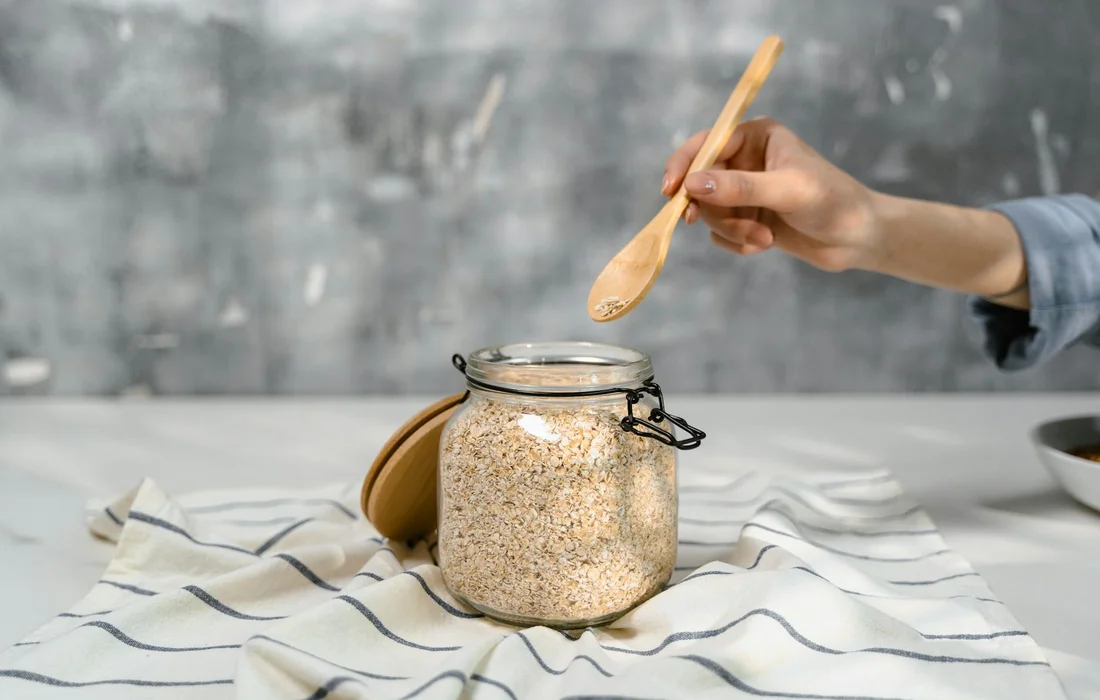
Not all oats are created equal, and the form you pick from the feed store or pantry shelf makes a world of difference. Let’s walk through your options, from the whole seed to the finest powder.
Understanding Your Oat Options
- Whole Oat Groats: These are the whole, minimally processed kernel with just the inedible hull removed. They’re chewy, nutritious, and take the longest to digest. I like them for my sows as a slow-feeding option in their paddock.
- Steel-Cut (Irish) Oats: Groats that have been chopped into two or three pieces with a steel blade. They cook faster than groats but still offer a hearty texture and are less processed than rolled oats.
- Rolled Oats (Oat Flakes): These are the classic, flat flakes you likely know. Groats are steamed and then rolled flat. This is the gold-standard, safest form for your guinea pig, as the processing makes them easier to nibble and digest.
- Quick or Instant Oatmeal: These are rolled oats that have been pre-cooked, dried, and rolled even thinner. Often, they have added salts, sugars, or flavors, which makes them a hard “no” for all barnyard animals.
- Oat Bran: This is the fiber-rich outer layer of the oat groat, separated during milling. It’s packed with soluble fiber but is very rich and can cause digestive upset if fed in large quantities.
- Oat Flour: Finely ground oats. It’s a dust-making, gut-clogging risk for small animals like guinea pigs and offers no textural benefit for pigs. Best left for your baking.
Recommendations by Critter
For your guinea pigs, always choose plain, uncooked, old-fashioned rolled oats. They are the perfect size for little mouths, pose no choking hazard, and their nutritional profile is consistent. Avoid anything flavored, instant, or powdery, as well as straw in diets that aren’t suitable.
For your pigs, you have more flexibility. Whole groats are excellent for encouraging natural foraging behavior. Rolled or steel-cut oats mix beautifully into a wet grain mash. The key is matching the form to your purpose-groats for enrichment, rolled for easy mixing.
Simple Preparation Steps
- For Guinea Pigs: Serve completely dry, straight from the container. No cooking, soaking, or mixing required. Just a small sprinkle.
- For Pigs: Soaking rolled or steel-cut oats in water for 30 minutes to an hour before feeding softens them and aids digestion. I often soak them in whey from our cheese-making for a probiotic boost. For groats, you can scatter them dry in their rooting area to keep them busy.
Feeding Guidelines: Portion Control and Schedule
Oats are a supplement, not a staple. Getting the portion right is the difference between a healthy treat and a bellyache. My rule has always been to err on the side of less-you can always give a bit more next time, but you can’t take a sour stomach back.
For Guinea Pigs: A Tiny Taste
Remember, a guinea pig’s digestive system is a hay-powered engine. Disrupting that with too many grains leads to obesity and serious gut stasis. Timothy or orchard grass hay must forever remain 80-90% of what they consume daily. For balance, alfalfa hay is sometimes considered for specific life stages, such as growth or pregnancy. We’ll explore hay choices for guinea pigs and how they differ from other animals, including pigs, in the next sections.
- Frequency: Once a week, maximum. This is a special tidbit, not a daily ritual.
- Quantity: One plain rolled oat flake per pig, or at most, a quarter teaspoon total for a pair. A level teaspoon weekly is an absolute ceiling for a duo.
- Water: Always ensure their water bottle is full and clean. Dry oats absorb moisture, so fresh water is non-negotiable.
For Pigs: A Calculated Component
For porkers, oats are a valuable part of a balanced grain ration, prized for their palatability and fiber. They should never be the sole grain, as their protein and lysine levels are lower than corn or soybean meal.
- In a Growing Ration: For pigs from weaning to about 150 pounds, oats can make up 10-25% of the total grain mix by weight. This adds bulk and fiber to keep their digestion moving without sacrificing too much growth rate.
- For Finishing Hogs: In the last 6-8 weeks before processing, many homesteaders reduce or remove oats from the ration. Their higher fiber content can soften fat, so a switch to a denser energy feed like barley or corn is common for firming up that final finish.
- Frequency & Quantity: Oats are typically fed as part of a twice-daily mash or complete feed. A common mix for a homestead grower feed might be 50% corn, 30% oats, and 20% protein supplement.
- Water: Pigs on any dry feed, especially one with oat hulls, require massive amounts of fresh water. A pig can drink 2-5 gallons a day. Without it, impaction is a real and dangerous risk.
Health Risks and Dietary Concerns
Handing out oats can feel like a kindness, but I’ve learned the hard way that generosity needs limits. Treats given without thought can quietly undermine your animal’s health, leading to vet bills and heartache.
For those adorable guinea pigs, their small size makes them especially vulnerable. A few extra oat flakes daily can quickly lead to obesity, which burdens their little frames and shortens their lives.
Their digestive systems are designed for constant grazing on fibrous grass hay. Oats are too soft and low in the crucial long fiber that keeps their gut moving; without it, they risk gastrointestinal stasis, a silent and deadly shutdown.
Minerals matter deeply, too. The calcium-phosphorus ratio in oats isn’t ideal for guinea pigs, and overfeeding can predispose them to the agony of urinary tract stones.
Now, for your hogs, the stakes are different but just as real. Oats are a modest protein source, around 12-14%, so letting them dominate a ration can stunt growth in young pigs needing 16-18% protein.
For sows in pens or older boars, those same oats pile on calories they don’t need. Excess weight stresses joints and can hamper fertility, turning a good supplement into a real problem.
Symptom Checklist: Know When to Pull Back
Your animals will tell you when the diet’s off-you just have to listen. Watch for these signs:
- Weight loss despite eating: A guinea pig feeling full on oats will neglect hay, losing condition from fiber deficiency.
- Lethargy or hunching: In any critter, a lack of energy often points to digestive discomfort or imbalance.
- Digestive upset: Look for loose stools in pigs or small, dry droppings in guinea pigs-both are red flags.
Navigating Common Barnyard Questions
“My guinea pig eats everything but his hay!” is a cry I’ve heard from many a frustrated homesteader. You must become the gentle enforcer, making hay the centerpiece of their world.
Try stuffing hay into empty toilet paper rolls or placing it right by their favorite snoozing corner. Sometimes, offering a different cut, like a softer second-cut timothy, can spark their interest where a coarse first-cut failed.
Never forget the supporting cast in their diet. High-quality timothy-based pellets provide fortified nutrients, and a daily cup of fresh veggies-like kale and bell pepper-delivers the essential vitamin C they cannot produce.
Building a Balanced Diet: Where Oats Fit In
Getting the diet right is like building a sturdy fence-each component has its specific place and purpose. Oats are a single rail in that fence, not the whole post and beam.
For your guinea pigs, picture their daily intake as a clear hierarchy. This order never changes:
- Unlimited Grass Hay: This should be 80% of their intake. I keep my racks overflowing with timothy or orchard grass.
- Measured Pellets: Just 1/8 cup per pig per day of a plain, fortified pellet-no colorful bits or seeds mixed in.
- Fresh Vegetables: A heaping cup daily per animal, focusing on dark leafy greens for nutrients.
- Treats Like Oats: A tiny pinch of rolled oats-no bigger than a dime-per pig, offered only once or twice a week.
For your porkers, oats find their place in a mixed ration. I use them to add variety and palatability, not as the main energy source. Here’s a sample blend I’ve used for growing feeders:
- 50% Cracked Corn (for energy)
- 25% Rolled Oats (for fiber and digestibility)
- 22% Soybean Meal (for protein, aiming for that 16% total)
- 3% Complete Hog Mineral & Salt Mix (this is non-negotiable)
This mix provides balance. For finishing hogs, I might reduce the oats to 10% and bump the corn, as they need more energy for final weight gain.
The golden rule on my farm applies to all creatures, great and small. Oats are a supplement, a condiment, or a training tool, but they must never replace the core feeds that form the foundation of health.
Hands-On Homesteading: Simple Oat-Based Treat Recipes
Now, I reckon there’s nothin’ better than seein’ your critters’ eyes light up when you come bearing a homemade snack. Makin’ your own treats lets you control the ingredients, save a penny, and turn kitchen scraps into somethin’ special for your animals. Here are a couple of my farm-tested favorites that use simple oats.
Granny’s Guinea Pig Grateables: Oat & Parsley Biscuits
My guinea pigs, much as I love ’em, can be picky little fellows. These baked biscuits give ’em somethin’ safe to gnaw on and a boost of fiber. I always use old-fashioned rolled oats for this, as the quick-cookin’ kind can get too gummy.
- Preheat your oven to 325°F and line a small bakin’ sheet with parchment paper.
- In a bowl, mix 1 cup of finely ground rolled oats (I run ’em through the coffee grinder) with 2 tablespoons of dried parsley and 1 tablespoon of dried dill.
- Slowly add in about 4-5 tablespoons of water, stirrin’ until it forms a thick, moldable dough.
- Roll the dough out to about a quarter-inch thick and use a small cookie cutter or knife to make bite-sized shapes.
- Bake for 15-20 minutes, until they are fully dry and hard. Let ’em cool completely before offerin’ one to your piggy as a weekly treat.
Piggy Pleaser: Soaked Oat & Garden Scrap Mash
This is my go-to for our pasture pigs when I want to supplement their forage or make a medication easier to administer. Soakin’ the oats makes ’em easier to digest and turns this into a hearty, spoonable pudding they’ll root for in seconds.
- In a large bucket, combine 2 quarts of old-fashioned rolled oats with enough warm water to cover ’em by an inch. Stir in a tablespoon of blackstrap molasses for minerals and a hint of sweetness.
- Let the mixture soak for a good 30 minutes to an hour, until the oats are soft and have absorbed most of the liquid.
- Fold in 4 cups of chopped kitchen and garden scraps. I use a mix like carrot tops, wilted lettuce, chopped zucchini, and apple cores-nothin’ moldy or from the onion family.
- Serve this mash in a sturdy feed pan. For a small herd of three, this amount makes a fine occasional treat, not a meal replacement.
A full belly makes for a happy animal, but balance is the cornerstone of good husbandry. Treats like these should never make up more than 10% of your animal’s daily intake, as their main nutrition must come from balanced feed, hay, or pasture. I use these recipes as a tool for enrichment and bondin’, not as a staple. Watch your critters, learn what they love, and always prioritize their core diet for long, healthy lives.
Closing Tips
Can I use oat products, like mats or bedding, for my guinea pigs?
Oat hay is an excellent, safe bedding and foraging material for guinea pigs, as it is essentially the grass and leaves of the oat plant. If you’re weighing the best hay types for guinea pigs, you’ll want to compare fiber content and palatability. Avoid using mats made from the actual grain, like rolled oats, as these can be ingested in large quantities and disrupt their digestive system.
Is it okay to feed my guinea pigs oats when they are outside in their pen?
It is not recommended. Outdoor time should focus on grazing on safe grasses and herbs, not supplemental grains. Feeding oats outside can also attract unwanted pests like rats or insects to the leftover food.
Why does my guinea pig eat everything except his hay?
If your guinea pig prefers oats or other foods over hay, you must limit treats entirely to encourage proper hay consumption. Hay is non-negotiable for their dental and digestive health, and a lack of it will lead to serious illness.
My guinea pig eats oats and other foods constantly but is still losing weight. What’s wrong?
This is a critical warning sign. Weight loss often means the animal is not eating enough hay, leading to fiber deficiency and gut slowdown. It can also indicate dental problems or other illness, requiring an immediate veterinarian visit.
Are oat-based treats for guinea pigs safe for other small barnyard animals like chickens or rats?
While plain oats are generally safe for chickens and rats in moderation, their nutritional needs differ. Chickens require specific poultry feeds, and rats are omnivores. Always research species-specific diets before sharing treats. For chickens, a practical oatmeal and cooked grain feeding guide can help balance treats with their staple diet. It offers simple ratios and safety tips for feeding cooked grains.
What is a simple, no-bake oat treat I can make for my guinea pigs?
Take a sprig of fresh cilantro or parsley and lightly mist it with water. Roll it in a tiny amount of plain, dry rolled oats so a few flakes stick. This creates a engaging, low-calorie foraging treat that prioritizes the fresh herb.
Shuttin’ the Gate on Grains
Whether you’re fussin’ over a fancy-haired Abyssinian in a cozy hutch or callin’ a two-hundred-pound Berkshire to the trough, the core truth is the same: a balanced diet is the bedrock of good health. The single most important takeaway is to view any grain, including wholesome oats, as a supplement to a primary diet of high-quality forage and feed, never as the main event. Moderation and mindfulness prevent a mountain of troubles, from a pig’s foundered feet to a guinea pig’s sore teeth. Your careful stewardship at the feed bucket pays off in vigorous, contented critters.
I reckon that’s about all from my porch for today. I’m mighty grateful y’all stopped by to chew the fat about proper feed. There’s a deep satisfaction in watchin’ your animals thrive on a meal you’ve thoughtfully provided. Now go on, enjoy the simple joys of a happy grunt or a pleased “wheek” from your charges-that’s what this life is all about. Take care, and happy homesteadin’!
Further Reading & Sources
- Guinea pig feeding schedule and dietary needs
- Oats Odyssey: Can Guinea Pigs Indulge in this Wholesome Goodness? – Central Victoria Hay
- Oats About That! Can Guinea Pigs Munch on Oaten Hay? – Central Victoria Hay
Caroline Mae Turner is a lifelong farm girl raised on red clay, early mornings, and the sounds of a bustling barnyard. With hands-on experience caring for everything from stubborn goats to gentle dairy cows and mischievous pigs, Caroline shares practical, tried-and-true advice straight from the farm. Her goal is to help folks keep their animals healthy, well-fed, and living their best barnyard life. Whether you're wrangling chickens or bottle-feeding a baby goat, Caroline brings a warm Southern touch and plenty of real-world know-how to every bucket in the barn.
Diet Requirements